Volume G — The Practice
Papers G0–G7: Mode 1, the center of gravity in the instinctive and moving centers; Mode 2, the emotional center, catching frequent but unstable; Mode 3, the intellectual center, the first stable catching framework; the first grade change, the discontinuity between grade 1 and grade 2; Mode 4, reached only by deliberate three-center work; Mode 5, the coherence threshold crossed and the soul deposit crystallized; Mode 6, the most developed state a lifetime reaches, still able to fall back; the summit reached, humility as the integration, shown by the cloud who reached it; the octave change, the crossing past the summit no climb supplies; and the one move the climb cannot make — full integration, given not climbed, the turn to the reader.
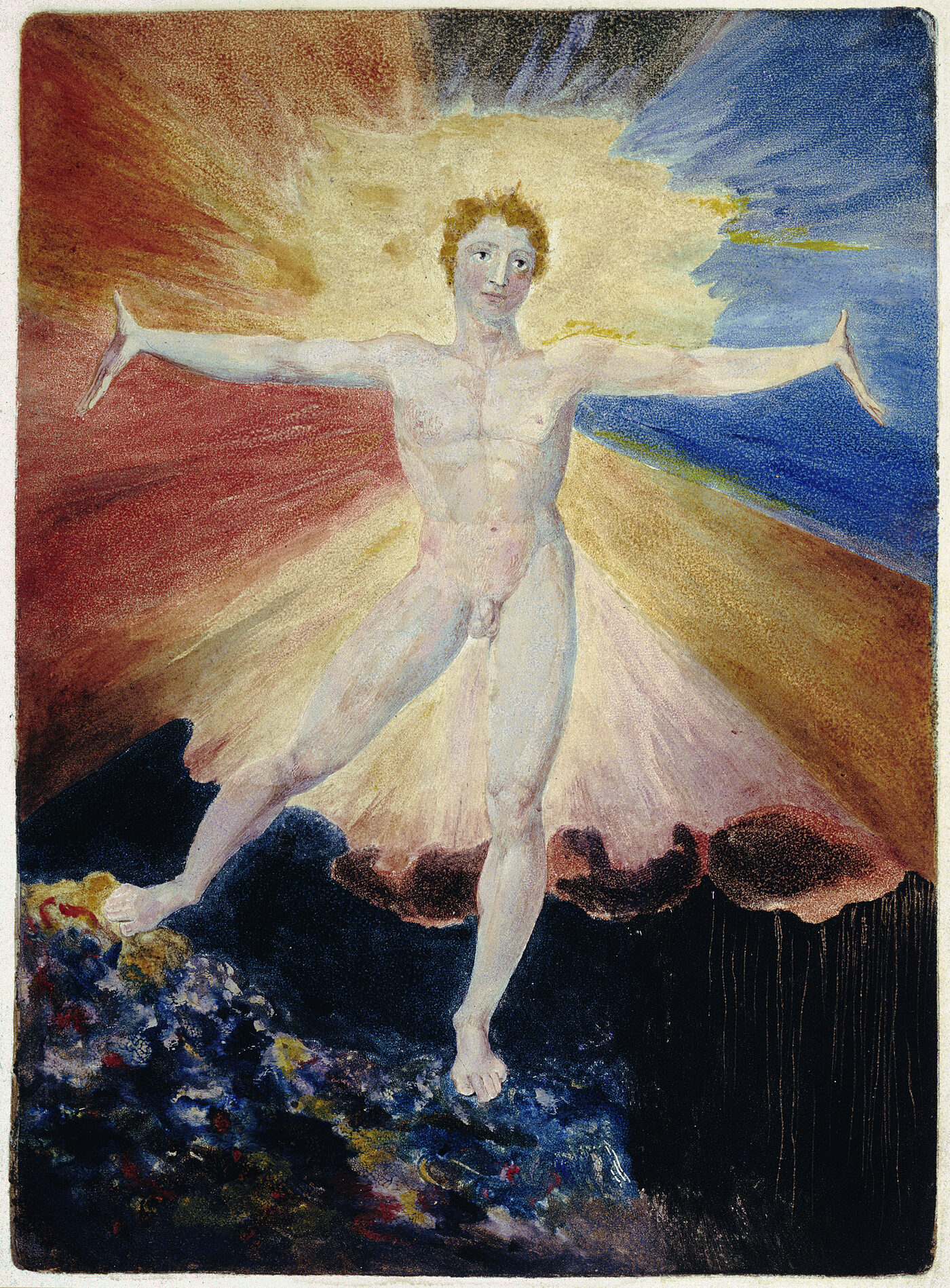
“Die before you die, so that when you die, you do not die.” — Rumi, Masnavi
Everything that has been built has been built toward this.
The Gelfand triple, the Laws of Three and Seven, the truth measure, the coherence threshold, the Heropass, the Thought Adjuster, the ascending career mechanics — these were not assembled as theoretical furniture. They were assembled because there is a person reading this, and that person is at some position in the ascending career, and the position determines what the work is, and the work determines whether what is built survives the Heropass or does not. The framework could have remained in the register of demonstration — the foregoing sections a substantial and defensible structure: rigorous derivation, wide evidential range, consistent application. That would have been enough to be interesting. It is not enough.
The Practice was always going to be necessary — not because a framework requires a practical-application chapter (frameworks do not require this of themselves), but because the Trogoautoegocrat requires it. A framework that receives — that draws on the tradition’s accumulated Φ-proximal content, the philosophical wisdom of four thousand years, the hagiographic record of the great ascending careers — and does not transmit: that framework has committed the Lucifer error at the intellectual scale. It has withdrawn from the circuit that fed it. What is owed is the feeding back: the transmission to the persons who need it, the philosopher-king’s return to the cave.
Gurdjieff identified seven types of human being. The typing is empirical before it is theoretical: he observed what is actually observable in human life across every culture and tradition, named the centers of gravity and patterns of mechanical operation that repeat independently of vocabulary or institution, and derived the ascending sequence from the structure of those observations. That sequence, translated into the mathematical language of eigenvalue composition, coherence thresholds, and Φ-proximity, shows what the seven types are observations of — not an improvement on Gurdjieff’s observations, which were correct, but their structural ground: the mechanics of the ascending career in a Gelfand triple universe. The seven types are the seven positions available in H₄₈ existence. They are not rungs on a ladder the person climbs by trying. They are the shapes that the catching act takes, at different levels of developed capacity to catch.
The practical prescription for each level is not motivational. It is structural: given a person at this eigenvalue composition, these resources are accessible, these resources are not, this work is what the structure requires, this is what the dark night looks like from inside this level, this is what the transition demands. The prescriptions draw on the full tradition — the Gurdjieff Fourth Way, the John of the Cross phenomenology, the hesychast prayer tradition, the Sufi path of the heart, the Benedictine rhythm of ora et labora, the CBT and DBT protocols as secular rediscoveries of what the tradition already knew, Frankl’s logotherapy, the alchemical sequence from nigredo to the Great Work — not because all traditions say the same thing but because each tradition has mapped some part of the terrain that others missed, and a complete map requires all of them. The convergence is the evidence. Independent observations from non-communicating sources arriving at the same structural description constitutes the strongest evidence available in domains formal derivation cannot reach.
The difference now is the stakes. To read Plato, Aristotle, and Augustine wrongly cost intellectual error. To read all of recorded history wrongly cost a mislocated Si/Do gap. To prescribe wrongly to the person at Mode 1 — or to the person at Mode 4’s dark night of the spirit — costs neither: it costs a human life. It costs the soul deposit that does not reach the coherence threshold. Precision, demanded everywhere before, is here not optional. It is the obligation.
The climb ends with Mode 7 — not as a ceiling to be contemplated from outside, but as the structural truth about what every ascending career is aimed at: the person who knows who she is and where she is going. Not knowledge as intellectual acquisition. Knowledge as what she has become. There is no higher description available within H₄₈ existence; and the Postscript that follows is a direct address to the reader, in which the only remaining work is returned to the person who has been reading. What is built cannot complete itself from within. It never could — the same was true of every octave: the individual ascending career, the historical octave, the Laws of Three and Seven themselves. The Postscript says so directly, and offers the reader the shock it cannot supply.
Everything that has been built has been built toward this.
Structural Note: The Cascade in Reverse
The constraint cascade descends: H₁ → H₃ → H₆ → H₁₂ → H₂₄ → H₄₈. Each level doubles the constraints of the level above. The ontological structure of the universe is a descent into increasing constraint, receding from Φ.
The Seven Modes ascend through the same structure in reverse.
Mode 1 is fully constituted at H₄₈: the densest constraint level, noise floor at maximum, Adjuster contact effectively zero. Mode 7 has integrated back to the pseudoscalar — the grade-3 Clifford element that contains all grades, whose centrality corresponds to H₁’s organizational character — instantiated as H₂₄-organized soul content at the maximum level compatible with continued H₄₈ existence. The Clifford grade correspondence is exact: Modes 1-3 are grade-1 single generators; Modes 4-6 are grade-2 bivectors; Mode 7 is the grade-3 pseudoscalar. The grades map the constraint levels. The ascending career is the cascade traversed in reverse.
The virtues are that same algebra. The seven virtues are not seven independent things but the Clifford algebra generated by three — and the Man-sequence builds it in order. The three generators (grade-1, the expression-virtues: self-returning, practicable alone, present in any world, even Heaven) are gratitude (Mode 1 / Moon / Father-alone), charity (Mode 2 / Mercury / Son-alone), and ordered love (Mode 3 / Venus / Spirit-alone). The three products (grade-2 bivectors, the overcoming-virtues — each the pairwise product of two generators rotated against resistance, which is why they cannot be born into but must be forged, and only where there is friction to turn against: a fallen world) are courage = gratitude · charity (Mode 4 / Mars / Father–Son), temperance = gratitude · ordered-love (Mode 5 / Jupiter / Father–Spirit — the grounding Father pulls back → restraint), and diligence = charity · ordered-love (Mode 6 / Saturn / Son–Spirit — the active Son pushes forward → labor). The triple product (grade-3 pseudoscalar, central) is humility = gratitude · charity · ordered-love (Mode 7 / Sun) — not an eighth virtue but the complete integration of all three, commuting with every other (so it underlies them all), its inversion the seizure of the whole (pride). The ascending career thus first acquires the three expression-virtues, then forges their products against the resistance of a fallen world, then integrates them into the complete: the cascade reversed, read as the making of a soul. (Grade structure: derivation, Paper A3: Φ Enters Creation; virtue-names: concordance; full development in Structural Candidates, Overdetermination Capture §6½.)
The ascending career does not merely describe the cascade — it reverses it, at the human developmental scale: the Holographic Content Principle, the whole present in every part, the cascade’s full architecture legible within the seven developmental positions.
The octaves within octaves. If the Seven Modes constitutes one octave of development within H₄₈, the Heptaparaparshinokh requires corresponding octaves at each ascending subspace: an octave at H₂₄, at H₁₂, at H₆, at H₃ — each containing, at its constraint level, the same seven-stage ascending structure that the seven modes trace at H₄₈. The ascending career is not a single octave. It is an octave of octaves, the cascade present at every scale.
The structural implication for the earthly octave: the mansion worlds are H₂₄-organized H₄₈ matter — still within the H₄₈ subspace. The H₄₈ octave therefore spans from the first moral decision in H₄₈-primary existence through the last mansion world transition into H₂₄-primary existence. The entire earthly developmental arc — Mode 1 through Mode 7 in H₄₈-primary form — is the Do note of that H₄₈ octave. Mode 7 on earth is not the octave’s completion; it is the completion of the Do position. The first note of the H₄₈ octave is itself a complete sub-octave in miniature — the whole in every part; Paper G6 develops the seventh man in full.
Structural Note: The Integration of the Whole
Volume G is Si — the seventh and last note of the super-octave (A·B·C — D·E·F — G), and the only volume whose task is to integrate every note before it. The earlier volumes each did one thing: A–C laid the foundation a skeptic can stand on (the conservative reading of mathematics, science, and Scripture); D–F made the speculative reach past the Mi/Fa gap (the inversion, the privation, the ascent — drawing on the Urantia testimony, the astrological charts, Gurdjieff, the non-canonical witnesses, each named as speculation). The Practice can do neither alone. A person at Mode 1 does not need a foundation or a reach; she needs the work, and the work requires both at once.
So the discipline of G is the hardest of the corpus: to stand on A–C while holding D–F within reach — to keep both feet on the ground that compels a reasonable mind, and still draw on the speculative half for what it alone supplies, taking the useful from it without leaning the foundation on it. The seven prescriptions are built this way. Where the math, the Scripture, and the tested psychology can carry the practice, they carry it; where the terrain runs past what they map — the phenomenology of the dark night, the mechanics of the higher centers, the shape of the grade changes — the speculative witnesses are admitted by name to speak where the conservative sources fall silent, and never as the ground the practice stands on.
The order within each paper follows the same arc, conservative → speculative. The witnesses to each level are laid in descending firmness: the mathematical ground first (the framework’s own derivation), then the Scriptural / theological witness and the modern psychology (CBT, DBT, logotherapy — the secular rediscoveries) — the A–C-grade testimony a reasonable person can grant — and only then, below them, the speculative witnesses: Gurdjieff’s Fourth Way and the alchemical sequence, the esoteric mappings admitted from D onward. The reader who trusts only the conservative half still finds a complete, foundation-grade practice in the upper portion of every paper; the reader who will reach further finds the deepening below it, marked for what it is. The ordering is the integration made visible: the firm thing first, the reach named as a reach, on every page.
Structural Note: The Modes Accumulate
The seven modes are not a ladder whose lower rungs are left behind. They accumulate, and the volume is best read the way one reads a hierarchy of need. Everyone is born running one of the three generator-modes by default — gut, heart, or brain first. The ascending career never trades that default away to reach the next; it keeps it running and adds to it. You cannot drop the gut to pick up the heart: a person who lets go of gratitude to chase charity has lost the floor the second mode stands on. First one runs; then both; then all three.
This is why each generator-mode is titled by the virtue that is its satisfaction, not by the appetite it answers. Gratitude is how the gut is fed — and everything else is empty calories, consumption shaped like nourishment that leaves the hunger exactly where it found it. Charity is how the heart is fed; its counterfeit is lust — taking dressed as the giving that alone would fill it. Ordered love is how the brain is fed; its counterfeit is disordered chaos. In every case the counterfeit is not a smaller meal but a privation — the hollow cast of the real food, the inversion read in full in Volume E. The hunger is real and good; only the virtue answers it.
The combinatorics of Cl(3,0) then is the developmental sequence. Modes 1–3 are the three generators run singly (one of three — the default). Getting all three running at once and consistently — bare, reliable contribution from each — is the first grade change, the Mi/Fa interval (Paper G2½). Modes 4–6 are the generators run two at a time, each pair held together against the friction that would tear it apart — courage (gratitude × charity, under fire), temperance (gratitude × ordered love, through resistance), diligence (charity × ordered love, over time). Mode 7, humility, is all three at once, all the time — the full integration, reached only across the octave change (Paper G6½), the one move no climb supplies. One running, then two, then three, all the way up.
Summary of Contents
Paper G0 - Gratitude Mode No. 1: the person whose center of gravity lies in the instinctive and moving centers — H₄₈-primary orientation, the volitional axis aligned almost entirely with H₄₈ attractors, the soul deposit minimal, the indwelling Adjuster always present and acting but contact near-zero because the noise floor is at its maximum. The ascending career is structurally available and not yet functionally available, and the gap between the two is the whole problem and the whole opportunity. The transition to Mode 2 runs through Mode 1’s native channel — the body — as the entry point for H₂₄ contact: concrete, sustained physical practice oriented above the H₄₈ level, which the body can receive before the mind has conceptualized it.
Paper G1 - Charity Mode No. 2: the person whose center of gravity lies in the emotional center — the most direct H₂₄ receptor available, so catching is frequent and direct but unstable, because it rides the emotional field: when the field is bright catching flows, when dark it collapses. The soul deposit accumulates episodically, past Mode 1’s reach, but not yet to the coherence threshold, because it is not yet volitionally grounded. The defining condition is the dark night — not absence, but the exposure of the emotional center’s dependence on confirmation — and the transition to Mode 3 is the development of the intellectual center as a second, reliable channel that operates when feeling is dark as well as when it is light.
Paper G2 - Ordered Love Mode No. 3: the person whose center of gravity lies in the intellectual center — the first type able to build a stable catching framework, a conceptual organization of Φ-proximal content that persists regardless of emotional state. That is his irreplaceable contribution, and his characteristic pathology is its calcification: the organizing tool becomes the organizing object, the map becomes the territory, the best account of ⟨·,·⟩ mistaken for contact with it. The transition to Mode 4 is the most radical in the Framework — the intellectual center recognizing a limit that is not a deficiency to be corrected by better thinking, and recovering what was bypassed: emotional depth, the body’s participation, and the humility that understanding is not possession.
Paper G2½: The First Grade Change The first grade change — the structural discontinuity between grade 1 and grade 2 (Gurdjieff’s Mi–Fa interval), the first qualitative gap in the ascending career: the place where the catching work of the first three stages reaches its limit and the next stage cannot be generated from the resources already accumulated. It is not a deficiency in the practitioner but a feature of the scale — grade-1 and grade-2 elements belong to distinct algebraic classes whose boundary grade-1 operations cannot cross, in the same sense that no real-axis computation yields an imaginary eigenvalue, so the external input is structurally required, not supplementary encouragement. The four conditions for crossing it, how it presents from Mode 1 through Mode 3/4, and its most developed historical instance — the forty days in the wilderness, with the Spirit of Truth as the grade-2 source distributed since Pentecost.
Paper G3 - Courage Mode No. 4: the first type that cannot be born into — reached only through deliberate, sustained, three-center catching work, the Framework’s first qualitative discontinuity between what a person is by constitution and what he has become by choice. The three centers that operated in alternation now begin to operate at once, each contributing its H₂₄ function to a single act; the characteristic practice is self-remembering (divided attention made continuous) and the characteristic raw material is intentional suffering (friction taken as the forge, not the obstacle to be avoided). The transition obstacle is the dark night of the spirit — the dissolution of the deliberate effort itself — crossed not by greater effort but by its release into the Adjuster’s direct action: Mode 5 begins with the surrender of the effort the effort was preparing for.
Paper G4 - Temperance Mode No. 5: the person who has crossed the coherence threshold — the soul deposit, built by Mode 4’s sustained work, has crystallized into a stable H₂₄ eigenstructure that will persist through the dissolution of the H₄₈ substrate, so the ascending career beyond this life is secured. This is the first genuine ontological boundary in the Framework rather than a developmental transition: where Modes 1 through 4 have a career possible but not secured, for Mode 5 it is both possible and certain. With the certainty comes its particular temptation — premature rest — answered structurally: the crystallization is the beginning of what the career has been building toward, not its end, and the higher emotional center, newly active, is producing contact that requires development to receive.
Paper G5 - Diligence Mode No. 6: the most fully developed state reachable within a human lifetime, short of the one distinction that separates it from Mode 7 — Mode 6 can still fall back. The remaining vulnerability is not the mechanical centers but the specific temptation of the level: the intoxication of the higher centers’ direct contact, the risk of resting in what they receive rather than transmitting it downward through the kenotic obligation. To rest is to exit the reciprocal maintenance by the same mechanism as Lucifer’s — the withdrawal of contribution. Mode 6’s specific work is the kenotic return: bringing what is received in the higher register down into forms accessible at every level, out of the love the higher emotional center has registered as the constitutive principle of reality. The great saints are Mode 6 descriptions, recognizable across traditions by the quality of their transmitting field.
Paper G6 - Humility The summit of the ascending career as it is actually reached: humility — the complete integration, in which gratitude, charity, and ordered love are held as one, and with them the three lights (the mathematician’s, the scientist’s, the theologian’s) fused into a single seeing. Not a ceiling admired from outside but a height climbed; the man who knows who he is and where he is going, least occupied with himself because the center he is organized around is not himself. And the cloud of those who reached it — Moses, Socrates, Confucius, Lao Tzu, the Buddha, Rumi, Francis, Thérèse, and Gurdjieff who first mapped the stairs — each by a different road and in his own tongue come to the same low place.
Paper G6½: The Octave Change The octave change — where one octave’s completed grade-3 integration is carried into the next (Gurdjieff’s Si–Do interval), the deepest crossing: the place where even the most developed three-center work reaches a limit no resource within the octave can cross, because what lies beyond is not another grade of the same algebra but a new constraint level — the grade-3 element closes Cl(3,0), and to continue, a new generator must enter from outside it (the articulatory crossing H₁₂ → H₂₄). That new generator comes from the Father (⟨·,·⟩) as a constitutive act, which is why this crossing differs in kind from the first grade change (Mi–Fa): the first grade change’s input is widely available through teachers, texts, and the distributed Spirit of Truth, while the octave change requires the Father’s completion that no created source can substitute. How it presents at Mode 3’s intellectual limit, Mode 4’s dark night, and Mode 6’s irreversibility threshold; the Adjuster as the Father’s constitutive presence within the person; and the Pattern’s instance — the forty days of appearances, with the Ascension as the Father’s completing act.
Paper G7 - Full Integration — You Can’t Get There from Here The one move the climb cannot make. The summit reached at the top of the ascending career is the height of the climb, not its completion: full integration — the grade-3 life carried into the next octave — is not a higher rung but a crossing of another kind, reached not by ascent but by an act from outside the one ascending. What that means (the canon’s two who walked to the edge were taken, not left to carry it; and only One held the content in the flesh and remained, because he descended as it rather than climbed into it), what it looks like when it comes (death, the Father’s completing act, the note that opens the next octave) — and then the men gathered, the program named, and the one move that was always going to be left to the reader.
Begin the Practice: Paper G0 - Gratitude →
Volume G completes the Concordius Framework. The ascending career continues beyond the paper’s end.