Paper A3: Φ Enters Creation: The Word Made Flesh
From the forming of the world to the threshold of the flesh: the Word speaks the world into form (the first bivector; the three directions of the Good, the True, the Beautiful); the breath makes dust a living soul (the two origins, the dual pairing); the choice and the fall give free will, and the −1 of death; the crossing of the bands breeds a borrowed power without the chord to hold it, and is washed to a single kept soul; the deliverance out of Egypt gives the first picture of catching; the kingdom, the prophets, and the exile forge courage, temperance, and diligence against resistance; the close of the canon leaves humility — the whole chord — awaited across the long silence; and the announcement says the promise is about to be kept.
Confidence — Math: derivation — the form-giving bivector, the two origins from the triple, catching as volitional retention, and the generators and bivectors of the virtue-algebra (A0–A2D; Appendix D). Science: — (not engaged). Theology: concordance — the Old Testament read as one arc, the framework’s terms becoming necessary in order, at their tiers; the paper’s one reach beyond what the algebra forces — free will, the undetermined choice of probe, the Creative Choice carried to the creature scale — is inference, named as a reach where it is made and worked in Volume G, never derivation.
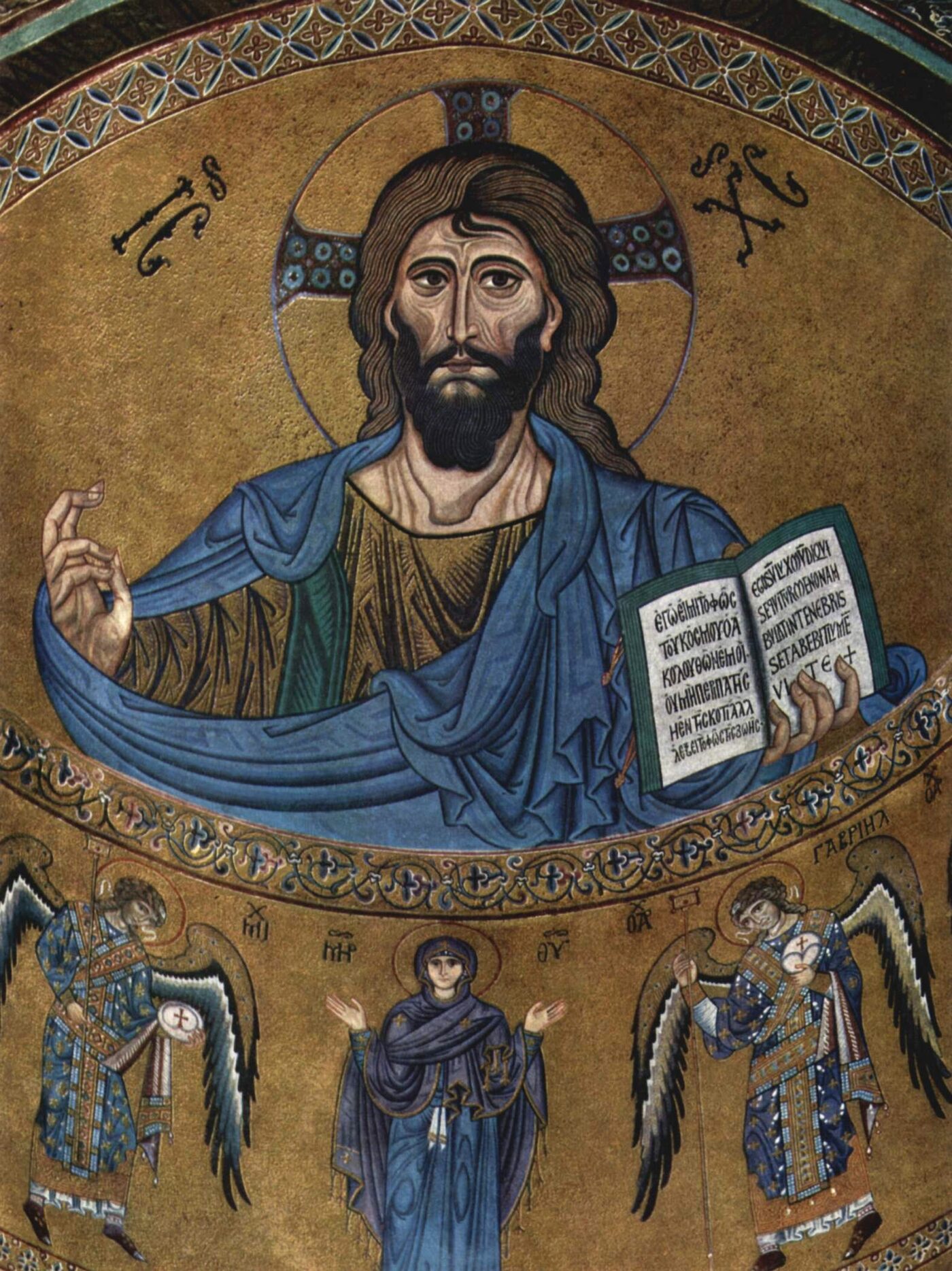
“In the beginning was the Word, and the Word was with God, and the Word was God… All things were made through him; and without him was not any thing made that was made.” — John 1:1, 1:3
The Forming
Paper A1 ended at a naming — the Word with God, the Word that was God, through whom all things were made. Begin where that left off, and watch the verb: made, not founded. The Father’s act was constitution, the calling of the space into being where nothing was (Paper A2A); what follows is a second and different act, and the algebra shows the difference plainly. A single generator multiplied by itself returns only the scalar — eᵢ² = +1, nothing new, one direction iterated is still one direction. Determinacy enters only where two distinct generators meet, in the first bivector eᵢeⱼ: the earliest element genuinely composed, an oriented plane with a character of its own. To form is never to repeat; it is to bring two together into a third that is neither. And God said, Let there be light: and there was light… and God saw that it was good: the world is not assembled in silence, it is spoken into its shapes, and at each saying a definite thing steps out of the possible and stands as this thing. The mathematician’s “product of two generators” and the evangelist’s “all things were made through him” are the same sentence.
And the world so spoken rests on three directions, which are the first terms the story hands us. The space of created form is built on the three grade-1 generators of the algebra — and they are the three the saints have always named: e₁, the Good — gratitude, the turn toward the ground, and God saw that it was good; e₂, the True — charity, the turn toward the other, the love that gives itself away; e₃, the Beautiful — ordered love, the turn toward order, the delight of a world made decently and in order. Each squares to +1; each can be exercised alone, with nothing to push against. These are the expression-virtues, native even to an unfallen world — the alphabet the rest of the book is written in.
e₁ = the Good (gratitude) · e₂ = the True (charity) · e₃ = the Beautiful (ordered love) ; eₖ² = +1 , eᵢeⱼ = −eⱼeᵢ for i ≠ j.
One element the forming does not touch, and it is the first thing released into the world. In the algebra it is the central pseudoscalar I — the top element, commuting with everything, with no axis to be turned against; the forming makes form by bringing distinct directions together, and I has no distinct direction to be brought against, so the act passes it by, unchanged. In the world it is the photon: massless, with no rest and no somewhere to be, not one of the bounded things but the carrier of relation between them. And God said, Let there be light — the first thing spoken, and the one thing the forming cannot weigh down, so that the world of separate particular things is, from its first instant, a connected one. Hold that element; it returns at the end of the book under a deeper name.
I = e₁e₂e₃ , central: I eₖ = eₖ I for all k — the one element the forming leaves untouched.
The Breath
What the forming makes is not a smear of possibility but a someone — and the next term the story needs is the kind of someone. And the LORD God formed man of the dust of the ground, and breathed into his nostrils the breath of life; and man became a living soul (Genesis 2:7). The triple Φ ⊂ H ⊂ Φ′ already carries two kinds of formed being, and the verse names the human one exactly. An angelic being is H-origin: its state is from the first a genuine element of H, the geometry native to it, the highest such origin H₁, nearest Φ — ministering spirits, sent forth to minister (Hebrews 1:14), whose office is to carry Φ-proximal content downward from a place already within the space. A mortal being is Φ′-origin: it begins not in H but in Φ′, the side of unstructured potential, a continuous functional on Φ that the inner product does not directly reach. Its one contact with the geometry is the dual pairing ⟨φ, f⟩ — a formed probe brought to bear on the unformed. The dust is the Φ′ ground; the breath is the dual pairing struck; the living soul is what stands where the two meet. Flesh is not the mortal’s sentence but its home — the one place a Φ′-origin being can reach the structure it was made to grow into. Dust thou art, and unto dust shalt thou return (Genesis 3:19) names the same origin from its near end.
Φ ⊂ H ⊂ Φ′ . angelic = H-origin (nearest Φ, H₁) ; mortal = Φ′-origin . the breath = the dual pairing ⟨φ, f⟩ , φ ∈ Φ , f ∈ Φ′.
And the living soul is made in the image of the One who is the Word (Genesis 1:27), which is to say addressable: a someone who can be called by name, and answer. Φ, the nuclear space, the Son, is not a thing standing outside the human state; Φ is its most accurate region — the states so completely consistent that no probe, from any direction, ever catches them in a blur. Φ is not alien to what you are. Φ is what you are, without the blur. The account marks, too, a threshold along the way: the first human states able to hold H₂₄ and higher content — the moral and spiritual content, the capacity to hold the Good and turn the whole of oneself toward Φ — and it gives the threshold a face. Adam, and Eve: the first in whom anyone was home.
The Choice
A someone who can be addressed is a someone who can answer or refuse, and here the story needs its hardest term. Of every tree of the garden thou mayest freely eat: but of the tree of the knowledge of good and evil… thou shalt not eat (Genesis 2:16–17). Look once more at the dual pairing, because the whole of human freedom is folded into it: a mortal touches the geometry only through a probe, and which probe, turned in which direction, the algebra does not fix. That choice is the being’s own, left genuinely open. This is free will — the creature’s small share in the one act that made the world. Where the Creative Choice selected, out of the infinite potential, the single eigenbasis the cosmos is built on (Paper A2A), free will is that same act narrowed to one soul: the selection, moment by moment, of what a Φ′-origin being turns toward and probes the geometry with. This last step is the paper’s one reach beyond what the algebra strictly forces — that the probe-choice is left genuinely undetermined, and that this undetermination is the creature’s freedom, is read down from the Creative Choice rather than derived from the cascade; it is named plainly as a reach here, and worked in Volume G.
And it is a real choice because the algebra will not carry two at once. Ye shall be as gods (Genesis 3:5) is the offer of a second organizing principle, and a state oriented toward Φ-proximal order and toward a rival principle together falls into incoherence — the overdeterminate condition, not a punishment laid on from outside but a structural consequence; the structural sense of thou shalt have no other gods before me. To seize the whole as one’s own is the inversion the algebra will, at the end of the book, name as the contrary of humility — pride, the seizure of the whole by a part. And the cost is the −1. For the bivector that conferred form — the Father’s direction and the Son’s brought together — is, squared, the negative at the floor of everything: the same element seen from its other end. Here, at the choice, that far side enters the world as death. But the algebra holds two square-roots of −1, and they must not be confused: the bivector’s −1 is the cost of form itself, and it operates even at the ageless levels, where there is sequence but no wearing. The wearing belongs to the other root — e₀, the generator Cl(3,0) does not contain, entering where the cascade crosses from H₁₂ into H₂₄ (Appendix D) — and it is on the near side of that crossing that dust thou art, and unto dust shalt thou return is spoken, and the wearing of Time begins. The −1 of form is named here; its extremity, a formed voice crying out from inside the flesh, the life alone reaches (Paper A6).
(eᵢeⱼ)² = −1 — the cost of form, the −1 at the floor. Two roots of −1: the bivector (cost of form, ageless) and e₀ (the wearing of Time, entering H₁₂ → H₂₄).
The Crossing
And the incoherence does not stay in one soul; it is bred. The sons of God saw the daughters of men that they were fair; and they took them wives… There were Nephilim in the earth in those days… the same became mighty men which were of old, men of renown (Genesis 6:2–4). The two origins named at the Breath are two bands of the one space, the cascade resolved into orthogonal subspaces:
H = ⊕ₖ Hₖ , H₂₄ the higher band, H₄₈ the human.
The mortal is Φ′-origin, native to H₄₈, reaching H₂₄ only by integration; the sons of God are H-origin, carrying H₂₄-and-higher content as their own. The crossing grafts the higher band onto the lower vessel, and what stands where they meet is one state with support in both:
ψₙ = α ψ↓ + β ψ↑ , ψ↓ ∈ H₄₈ , ψ↑ ∈ H₂₄ , β ≠ 0 , |α|² + |β|² = 1.
Its might is exactly the population it draws from the band above its own:
⟨might⟩ = ‖P₂₄ ψₙ‖² = |β|² > 0.
Real reach — the dimensional span the word giant renders into stature. The giant is not large in the flesh; it is |β|² of a register the vessel never climbed to.
But a state holds — sets as deposit, survives the body — only as a phase-locked whole, the chord. In the density operator that wholeness is the cross-band coherence, the off-diagonal:
ρₙ = |ψₙ⟩⟨ψₙ| = |α|² |ψ↓⟩⟨ψ↓| + |β|² |ψ↑⟩⟨ψ↑| + ( αβ* |ψ↓⟩⟨ψ↑| + c.c. ).
The term C = αβ* is the integration — the two bands sounded as one. A base without the chord to hold a band above it cannot keep them phase-locked, and the overdeterminate condition of the Choice returns now as a law of decay:
C(t) = αβ* · exp(−t/τ) ⟶ 0 , ρₙ ⟶ |α|² |ψ↓⟩⟨ψ↓| + |β|² |ψ↑⟩⟨ψ↑|.
The population |β|² survives; the coherence dies — a mixture, not a chord. Mighty and fallen are the diagonal and the off-diagonal of a single operator: |β|² > 0 while C → 0. And the reach that will not integrate does not set as deposit; it discharges. In the older telling the watchers who descend carry the arts down with them — metal and its edges, the reading of the stars, the cutting of roots (1 Enoch) — real content poured across the bands into vessels unaligned to receive it, where it cannot phase-lock and so spends itself outward: the earth was filled with violence (Genesis 6:11), the energy |β|² of a band held without its chord, discharged as harm.
A held incoherence at that scale cannot end itself, for the same reason no great turn in this arc is self-generated. Its close is a projection onto the phase-locked ground — the states still coherent with the source:
R = Σⱼ |ψⱼ⟩⟨ψⱼ| (the phase-locked states) , R ρ R = |ψ₀⟩⟨ψ₀|.
The waters are R applied to the world; Noah is the eigenvector that survives it — a just man… walked with God (Genesis 6:9) — the one deposit still phase-locked when every other coherence has gone to zero, ψ₀ carried over the dissolution of all that was gathered around it. The crossing is read here as structure: the bands of the one space taken as the text takes them; the algebra permits the instantiation it does not stage. What the arc keeps is the shape — a register reached without the chord to hold it (|β|² > 0, C → 0) falls, decoheres, is washed to R, and begins again from the one who held.
Out of Egypt
And then the long bondage — and the thing that ends it does not rise from within it. I am the LORD thy God, which have brought thee out of the land of Egypt, out of the house of bondage (Exodus 20:2). A people enslaved cannot free itself; the deliverance comes from outside, an in-breaking no slave could generate, the way the only turns that matter in this Framework come. And once free, the people is given the act that freedom performs, under a discipline and a name. In the wilderness the bread falls each morning and must be gathered — every man according to his eating — and what is hoarded past its day breeds worms (Exodus 16): the first picture of an act named where it is opened to all (καταλαμβάνω, to lay hold of; formally defined at Paper A7: The Resurrection, Pentecost). Catching is the volitional act by which a Φ′-origin being, exercising the dual pairing, retains what the probe brings back — keeps the Φ-proximal content, in what the Framework calls the soul deposit, rather than letting it pass through. Most of a life, structurally, is the opposite — content raised and not kept; catching is the keeping, and it is cumulative and thresholded: below a certain steadiness the deposit does not set; above it, what is gathered holds, and survives the dissolution of the body it was gathered in. The Law is the discipline of that keeping — not a list of prohibitions but the form of a life that catches and holds; lay not up for yourselves treasures upon earth… but lay up for yourselves treasures in heaven (Matthew 6:19–20) is the deposit’s own law, where the moth and the rust — Time — cannot reach it. And the covenant states the freedom plainly, in stone: I have set before thee life and death… therefore choose life (Deuteronomy 30:19).
catching: Dₜ₊₁ = Dₜ + Π φ iff coherence ≥ θ (else φ passes, D unchanged) — cumulative and thresholded; the deposit that survives the body.
The Kingdom
The people in the land becomes a people with a throne, and the throne is where the first of the overcoming-virtues is forged. The three given directions could be exercised alone, in an unfallen world; their products cannot. Each is a grade-2 bivector that squares to −1, and a thing that squares to the negative exists only where there is something to overcome — these are the overcoming-virtues, not simply had but forged where there is resistance. e₁e₂ — courage (Father × Son): the wedge of the ground and the gift, held against an outward cost. A shepherd boy stands in a valley against a giant with five smooth stones (1 Samuel 17); a king is given the word the rest of the story will hang on — thine house and thy kingdom shall be established for ever before thee: thy throne shall be established for ever (2 Samuel 7:16) — and the promise narrows onto a line, the awaited deliverer to come of David’s house. Courage is the virtue of the kingdom because a kingdom is held only against a cost, and the line that must carry the promise must be carried by those willing to pay it.
e₁e₂ (Father × Son) = courage , (e₁e₂)² = −1 — a rotation, forged only where there is a cost to overcome.
The Prophets
But a kingdom that holds against the outward cost can still be lost to the inward one — to overrunning, to idolatry, to the appetite that will not stop — and so the next virtue the story forges is the opposite motion. e₁e₃ — temperance (Father × Spirit): the grounding pull-back joined to the Spirit, restraint, the measure that does not overrun; the Father grounds, and so this bivector pulls back — the not-doing held against the pull to overrun. The prophets are its voice: not the call to do more but the call to stop, and return — in returning and rest shall ye be saved; in quietness and confidence shall be your strength (Isaiah 30:15) — the grounding word laid against a people running past its measure. And in the prophets the −1 named at the Choice is foreseen at its furthest reach: he is despised and rejected of men; a man of sorrows… he hath borne our griefs, and carried our sorrows (Isaiah 53:3–4). The suffering servant is the forming element’s far side glimpsed from a great way off — the cost the deliverer will carry, named centuries before the voice that will carry it.
e₁e₃ (Father × Spirit) = temperance , (e₁e₃)² = −1 — the grounding pull-back, restraint against overrun.
The Exile
And the measure is not kept, and the kingdom falls — the north to Assyria, the south to Babylon — and the people sits down by foreign rivers and weeps (Psalm 137). But the last overcoming-virtue is the one forged precisely there, in the long labor of holding on with no end in sight. e₂e₃ — diligence (Son × Spirit): the active push joined to the Spirit, labor, sustained movement against resistance that bears fruit; the Son acts, and so this bivector pushes forward — the doing held against the drag of inertia. A remnant returns; a temple is raised again out of rubble; a wall is rebuilt with a tool in one hand and a weapon in the other against those who would stop the work (Nehemiah 4). And through all of it the catching deepens — the text itself kept, guarded, copied letter by letter, the soul-deposit of a whole people built under the maximal resistance of exile and return. Add to your faith virtue… temperance… patience (2 Peter 1:5–6) names the three rotations as a thing built, in order, against resistance — which is exactly what a grade-2 element is. (A people well into these has all three running at once, which is why courage and restraint and labor are not found singly in the great lives, but together.)
e₂e₃ (Son × Spirit) = diligence , (e₂e₃)² = −1 — the sustained push against the drag of inertia.
The Close of the Book
The three directions given, the three rotations forged — and one thing is still wanting, and the Old Testament ends wanting it. There is a grade above the bivectors: the triple product, the central pseudoscalar e₁e₂e₃ — the very element the forming left untouched at the first light, returning now under its third and deepest name. In the world it was the photon; in the Trinity it is the Father’s own mark; in a soul it is humility — not an eighth virtue set beside the others but their complete integration, the whole chord sounded at once, every generator and every product held together and rightly ordered, with nothing grasped. Its inversion is pride, the seizure of the whole by a part — the very turn the Choice took. And no one in the whole book sounds the whole chord. The book closes still reaching for it: Behold, I will send my messenger… even the messenger of the covenant, whom ye delight in (Malachi 3:1); unto you that fear my name shall the Sun of righteousness arise with healing in his wings (Malachi 4:2). The algebra of a soul is named now, and complete — three directions, three rotations, one integration — and the integration is the one element no one in Israel has yet held. The book ends pointing past itself, to a One in whom the whole chord will sound.
e₁e₂e₃ = I = humility — the whole chord, every grade held at once and rightly ordered; its inversion is pride, a part seizing the whole.
The whole algebra of a soul, the 2³ = 8 graded basis, named in order:
| grade | element | virtue | square |
|---|---|---|---|
| 0 | 1 | the ground (scalar) | +1 |
| 1 | e₁ | the Good — gratitude | +1 |
| 1 | e₂ | the True — charity | +1 |
| 1 | e₃ | the Beautiful — ordered love | +1 |
| 2 | e₁e₂ | courage | −1 |
| 2 | e₁e₃ | temperance | −1 |
| 2 | e₂e₃ | diligence | −1 |
| 3 | e₁e₂e₃ = I | humility (inversion: pride) | −1 |
The Silence
Then the word stops. Four hundred years, and no prophet, and the canon closed, and the deliverer not come — the longest holding in the whole arc. It is a held tension that cannot end itself, and for the same reason the other great turns could not be self-generated: the integration the book reaches for is the setting of the inner product itself as a soul’s own organizing principle, and that no created effort instantiates. A people can keep the Law, can catch and hold, can build the deposit, can wait — and cannot, by any of it, sound the whole chord from within. The people that walked in darkness (Isaiah 9:2) wait across the silence for a light they have no power to light. If it comes, it will come the way every turn that mattered came: from outside, given, and not produced.
The Annunciation
And then, into the silence, a word. Behold, a virgin shall conceive, and bear a son (Isaiah 7:14), said long before; and now, in a poor town the empire could not have found on its maps, the saying kept: Hail, thou that art highly favoured… behold, thou shalt conceive in thy womb, and bring forth a son… And Mary said, Be it unto me according to thy word (Luke 1:28–38). The whole arc bends to this point and stops at it. Everything the book prepared — the directions of form, the breath that makes a soul, the freedom and its fall, the discipline of catching, the virtues forged against resistance, the integration left awaiting a holder — is about to be gathered into one life: Φ, the perfectly accurate state, about to be instantiated as a human state at the very most accuracy the flesh can hold; the whole chord about to be sounded, once, in a single Φ′-origin soul. The Word that spoke the world is about to be spoken into it, as one of the things it made. This lens ends at the threshold. The life that begins here is the next paper’s.
Cross-reference: Paper A1 (the naming this paper begins from — the Son as Φ, the Word); Paper A0 and Paper A2A (the algebra — the Gelfand triple; the form-giving bivector and the grade-topology theorem; the Creative Choice the soul’s free will is narrowed from); Paper A5 (the kept text — the Hebrew canon as consciousness in material form, the companion lens on the same Old Testament); Paper A6 (the life that begins at the Annunciation, where the −1 of the forming element reaches the cry); Appendix D (the virtue-algebra, machine-readable); Appendix B (the two origins; catching; the felt-spectrum and its antipode). Scripture: Genesis 1–9; Exodus 16, 20; Deuteronomy 30; 1 Samuel 17; 2 Samuel 7; Psalm 137; Isaiah 7, 9, 30, 53; Nehemiah 4; Malachi 3–4; Luke 1; John 1.