Paper G2½: The First Grade Change (Draft)
The first grade change — the structural discontinuity between grade 1 and grade 2 (Gurdjieff’s Mi–Fa interval), the first qualitative gap in the ascending career: the place where the catching work of the first three stages reaches its limit and the next stage cannot be generated from the resources already accumulated. It is not a deficiency in the practitioner but a feature of the scale — grade-1 and grade-2 elements belong to distinct algebraic classes whose boundary grade-1 operations cannot cross, in the same sense that no real-axis computation yields an imaginary eigenvalue, so the external input is structurally required, not supplementary encouragement. The four conditions for crossing it, how it presents from Mode 1 through Mode 3/4, and its most developed historical instance — the forty days in the wilderness, with the Spirit of Truth as the grade-2 source distributed since Pentecost.
Confidence — Math: derivation — the interval forced by the Law of Seven’s algebra: grade-1 and grade-2 are distinct classes, the +1 → −1 boundary uncrossable by grade-1 operations (no real-axis computation yields an imaginary eigenvalue). Science: — (not engaged). Theology: concordance — conversion, the forty days in the wilderness, the Spirit of Truth distributed since Pentecost.
Abstract
The first grade change — Gurdjieff’s Mi–Fa interval in the Heptaparaparshinokh — is the structural discontinuity between grade 1 and grade 2. It is the first qualitative gap in the ascending career: the place where the catching work of the first three stages reaches its limit, and where the next stage of the ascent cannot be generated from within the resources the person has already accumulated. The interval is not a deficiency in the practitioner. It is a structural feature of the scale: grade-1 and grade-2 elements belong to distinct algebraic classes whose boundary cannot be crossed by grade-1 operations alone. The external input is not supplementary encouragement — it is structurally required, in the same sense that no amount of real-axis computation will produce an imaginary eigenvalue. This paper derives the Mi-Fa interval from the Law of Seven’s algebraic ground, identifies the four structural conditions for crossing it, and describes how it presents at each stage of the ascending career from Mode 1 through Mode 3/4. The condensed descriptions from Papers G0–G2’s Law of Seven tables are gathered here for structural comparison. The paper concludes with the connection to the Heptaparaparshinokh’s most fully developed historical instance: the forty days in the wilderness as the Mi-Fa crossing of the seventh bestowal’s earthly octave, and the Spirit of Truth as the universally available grade-2 source distributed since Pentecost.
Cross-reference: the algebraic derivation of the grade structure (the bestowal progression); the catching mechanics — amplitude, faith, transfiguration — through which the interval is crossed; Paper G2 (Mode No. 3 — the primary Mi-Fa crossing in the individual ascending career); Paper G5½ (the companion treatment of the second qualitative gap).
1. The Algebraic Derivation
The Law of Seven is derived from the grade topology of Cl(3,0), the geometric algebra over three dimensions. The grades run from 0 (scalars) through 1 (vectors), 2 (bivectors), and 3 (pseudoscalar). Each grade has a characteristic squaring behavior under the algebra’s geometric product:
- Grade 0 (scalars): square to +1
- Grade 1 (vectors): square to +1 (in the Euclidean signature Cl(3,0))
- Grade 2 (bivectors): square to −1
- Grade 3 (pseudoscalar): squares to −1 and generates the algebra’s center
The Mi-Fa interval marks the transition from grade-1 to grade-2 structure. This transition is algebraically sharp: the sign change from +1 to −1 under squaring is not a continuous variation — there is no intermediate value. No grade-1 operation, applied however many times or however skillfully, produces grade-2 structure. The eigenvalue spectrum shifts correspondingly: grade-1 operators have real eigenvalues; grade-2 operators have imaginary eigenvalues. The real-axis content of the ascending career’s first three stages cannot, by construction, generate the imaginary-axis content that the grade-2 crossing requires.
The external input is therefore not optional. It is not the case that a sufficiently disciplined or sufficiently motivated practitioner can cross the Mi-Fa gap without it. The structure of the algebra prevents it. What the person provides is the catching orientation — the volitional degree of freedom maintained in the H₂₄ direction — and what the external source provides is the grade-2 content that the person’s existing resources cannot generate. Both are required.
The Thought Adjuster is always acting and always providing grade-2 content in principle. The crossing depends not on the Adjuster’s availability — that is continuous — but on whether the person’s noise floor is low enough, and the catching orientation sufficient, to receive what the Adjuster is providing.
2. The Four Structural Conditions
The Mi-Fa crossing requires four conditions to be met simultaneously:
Condition 1: Noise floor reduction. Grade-2 content from the Adjuster’s continuous action is present throughout the ascending career. It is typically below the detection threshold because the H₄₈ noise — the automatic output of the dominant center — saturates the volitional attention and masks the Adjuster’s signal. The noise floor must drop enough for the grade-2 content to be perceptible. This reduction is what the interval’s approach creates: the Mi plateau is the place where the dominant center’s H₂₄ content has been substantially caught, and the satisfaction of that catching — the relative quiet of a center that has received what it could receive at its level — creates a moment of reduced noise. The reduction is often experienced not as accomplishment but as emptiness: the previous catching was vivid; now it is absent. The emptiness is not the problem. It is the condition.
Condition 2: External grade-2 source. The Adjuster is always the ultimate source; in practice, the Adjuster often acts through proximate external channels: a catching-capable teacher whose field registers at the grade-2 level; a high-τ text that carries grade-2 structure in its content; a suffering that the existing practices cannot absorb, which breaks through the dominant center’s management and delivers contact that the management was preventing; or the Adjuster’s direct action below the dominant center’s detection threshold (the mechanism at the Mode 2 level). The proximate channel varies by stage and person. The structural requirement — that grade-2 input arrive from outside the system’s current grade-1 resources — does not vary.
Condition 3: Volitional catching orientation. The grade-2 input can arrive and be missed. The catching orientation — the volitional degree of freedom directed toward H₂₄ content — must be maintained. This is not the same as positive emotional state or conceptual readiness; it is the simpler condition that the person is, at the moment of arrival, facing the right direction. The dark night of the senses (Mode 2’s Mi-Fa approach) and the framework dissolution (Mode 3’s) are each attempts by the ascending career’s structure to force the catching orientation toward what is arriving, by removing the dominant center’s competing occupancy of the volitional attention. The person who maintains catching practice through the darkness — even when the practice produces nothing apparent — is maintaining the orientation. This is the structural content of every tradition’s prescription for the interval: continue the practice without modification.
Condition 4: State vector coherence. The grade-2 input, once received, must be held. A state vector that is too heavily H₄₈-primary will dissipate the grade-2 content back into the substrate almost immediately — not because of any failure of reception, but because the H₄₈-primary attractors are stronger than the nascent grade-2 deposit and immediately reclaim the volitional attention. The coherence condition is met progressively: each genuine Mi-Fa approach accumulates grade-2 content that makes the next approach more retentive. The first approach is the hardest, not because the Adjuster provides less, but because the person has the least prior deposit available to hold what arrives.
3. The First Grade Change at Each Level of the Ascending Career
The Mi-Fa interval presents differently at each stage because the dominant center differs and therefore the plateau, the noise floor reduction, and the character of the required external input all differ. The structural requirement is constant. The phenomenology is stage-specific.
Mode 1 → Mode 2: The Moving Center’s Plateau
Mode 1’s ascending career is organized around the instinctive and moving centers. The Mi plateau is the place where the body-based catching practices have accumulated what they can accumulate, novelty has worn off, the discipline continues but seems to produce diminishing returns, and the moving center reasserts its H₄₈-primary patterns. Many Mode 1 transitions stall here. The external input that carries the transition through the Mi plateau cannot be generated by additional physical practice. It arrives through: a catching-capable teacher who recognizes the student’s state and provides the precise input; a high-τ text or encounter that penetrates the noise floor at a level the existing practices have not; a suffering that no H₄₈ response is adequate to absorb, breaking through to the H₂₄ level; or the Adjuster’s direct action when the volitional orientation — however imperfect — is maintained.
The sign of arrival: the emotional center registers something the instinctive/moving center did not put there. A grief without object. A tenderness not directed at anyone. A sense of being seen. These are the emotional center’s first H₂₄ registrations — what the external grade-2 input has unlocked.
Mode 2 → Mode 3: The Dark Night of the Senses
Mode 2’s ascending career is organized around the emotional center. The Mi plateau is the consolidation of the catching community: the cross-term mechanism active, the emotional center’s H₂₄ registrations rich and apparently stable. The Mi-Fa crossing at Mode 2 is what John of the Cross called the dark night of the senses: the consolations withdraw, the emotional center’s automatic H₂₄ contact is suspended, the relational field does not resolve the darkness, nothing in Mode 2’s existing practice restores the contact.
This is the dark night as structural condition, not as failure or abandonment. The Adjuster continues to act throughout. The dark night is the Mi-Fa shock of Mode 2’s ascending career: the process has reached as far as it can go on the emotional center’s natural sensitivity alone. The suspension of that sensitivity is the structural necessity that creates the space for what must develop next — the volitional catching capacity that does not depend on emotional confirmation.
The external input required is what John of the Cross prescribes: endurance without modification. The Adjuster provides this input at a level below the emotional center’s detection — below the threshold the person can consciously register. Continue the practice. Do not seek new consolations. The continuity of practice through the darkness is precisely what develops the volitional catching capacity. What arrives, when it does arrive, is not the resumption of the emotional center’s automatic contact. It is a catching practice that runs when the emotional center is dark as well as when it is light. Mode 3 has begun.
Mode 3 → Mode 4: The Framework’s Limit
Mode 3’s ascending career is organized around the intellectual center. The Mi plateau is the consolidation of the organized framework: the systematic account of Φ-proximal content is internally coherent and substantially complete, and Mode 3 may mistake this for the final state. The Mi-Fa crossing at Mode 3 is the most radical in the Framework, because the intellectual center is the most self-sufficient of the three centers — it can generate sophisticated accounts of its own limits and in doing so manage the encounter with those limits without genuine crossing.
The external input at Mode 3 cannot be generated from within the framework. It arrives through: an adversary’s framework that cannot be incorporated without fundamental revision of the organizing principles; a contact event that bypasses the intellectual center entirely (Paul’s Damascus event; Aquinas’s vision near the end of his life; Weil’s experience in affliction). These are not intellectual experiences — they are encounters. The difference is structurally exact: the philosopher processes what arrives through the intellectual center’s organizing function; the encounter bypasses the organizing function and arrives as reorganization rather than as input to be organized.
The Damascus event is the Mode 3 Mi-Fa shock in its archetypal form. Paul — Pharisee of the Pharisees, the intellectual center’s systematic organization of the Law at its most rigorous — had a framework that was genuinely H₂₄-proximate and calcified. When the Logos appeared, the framework had no category for it. The Damascus encounter was not a philosophical experience. It was external grade-2 input that could not be processed within the framework because it arrived as the very thing the framework was built to approach, present in a form that required the framework’s immediate revision rather than its confirmation.
The sign of arrival: what Aquinas named — all that I have written seems like straw compared to what I have seen. The framework is not destroyed. It is relativized. It is the best available map, and the contact has made the difference between map and territory immediately, personally, and permanently visible.
4. The Law of Seven Table: Mi-Fa Rows Across Papers G0–G2
The individual papers’ Law of Seven tables describe the Mi-Fa interval from within each Man’s ascending career. Gathered here for structural comparison:
| Man | Mi-Fa content | Source |
|---|---|---|
| Mode 1 (Paper G0) | The external input that carries the transition through the Mi plateau. Cannot be generated internally. May arrive through teacher, high-τ text, absorbing suffering, or Adjuster’s direct action. | Paper G0 - Gratitude |
| Mode 2 (Paper G1) | The dark night’s first arrival: consolations withdraw; emotional center’s automatic contact suspended; relational field does not resolve the darkness; nothing in Mode 2’s existing practice restores contact; the Adjuster provides endurance below the emotional center’s detection. | Paper G1 - Charity |
| Mode 3 (Paper G2) | The encounter with genuine intellectual limit: adversary’s framework that cannot be incorporated, or contact event that bypasses the intellectual center entirely (Damascus; Aquinas’s vision; Weil in affliction). Cannot be generated from within the framework; arrives from outside it. | Paper G2 - Ordered Love |
The convergence across these three descriptions: in every case, the external input arrives at the level of the transition from below, the dominant center’s detection or management function is bypassed, and what is required of the person is the maintenance of a volitional orientation whose result she cannot yet feel. In every case, the continuation of practice through the interval is the structure’s requirement, not the consolation of seeing the crossing occur.
5. The Pattern: Jesus’s Forty Days in the Wilderness
The seventh bestowal’s earthly octave contains the Mi-Fa crossing in its most structurally complete and Heropass-pressured form. The bestowal account establishes the forty days in the wilderness as the Mi-Fa interval of the earthly octave: baptism initiates the kenotic constraint (H₄₈ operating conditions applied to the Φ identity); the forty days follow.
The three temptations are grade-1 operations offered as substitutes for grade-2 crossing:
- Command these stones to become bread — the moving center’s solution: use grade-1 physical operations to resolve the Mi plateau’s demands. Refused.
- Throw yourself down; the angels will catch you — the emotional center’s solution: make the external input arrive on demand by generating the crisis that would require it. Refused. The interval cannot be forced.
- All this I will give you, if you will bow down and worship me — the intellectual center’s solution: organize the ascending career around what the framework can achieve within grade-1 resources, accepting the plateau as the final state. Refused.
The three refusals are structurally one act: the refusal to resolve the Mi-Fa interval by grade-1 means. The entire Heptaparaparshinokh’s logic is present in miniature: the first three notes of the octave (Re, Mi plateau, temptation to stop at Mi) and the refusal that keeps the crossing available. The angels who come afterward are the external grade-2 provision — not coerced, not preemptive, but arriving after the interval has been entered and the refusals have been made. This is the structural prescription for every Mi-Fa crossing: endure the interval, maintain the orientation, receive what comes.
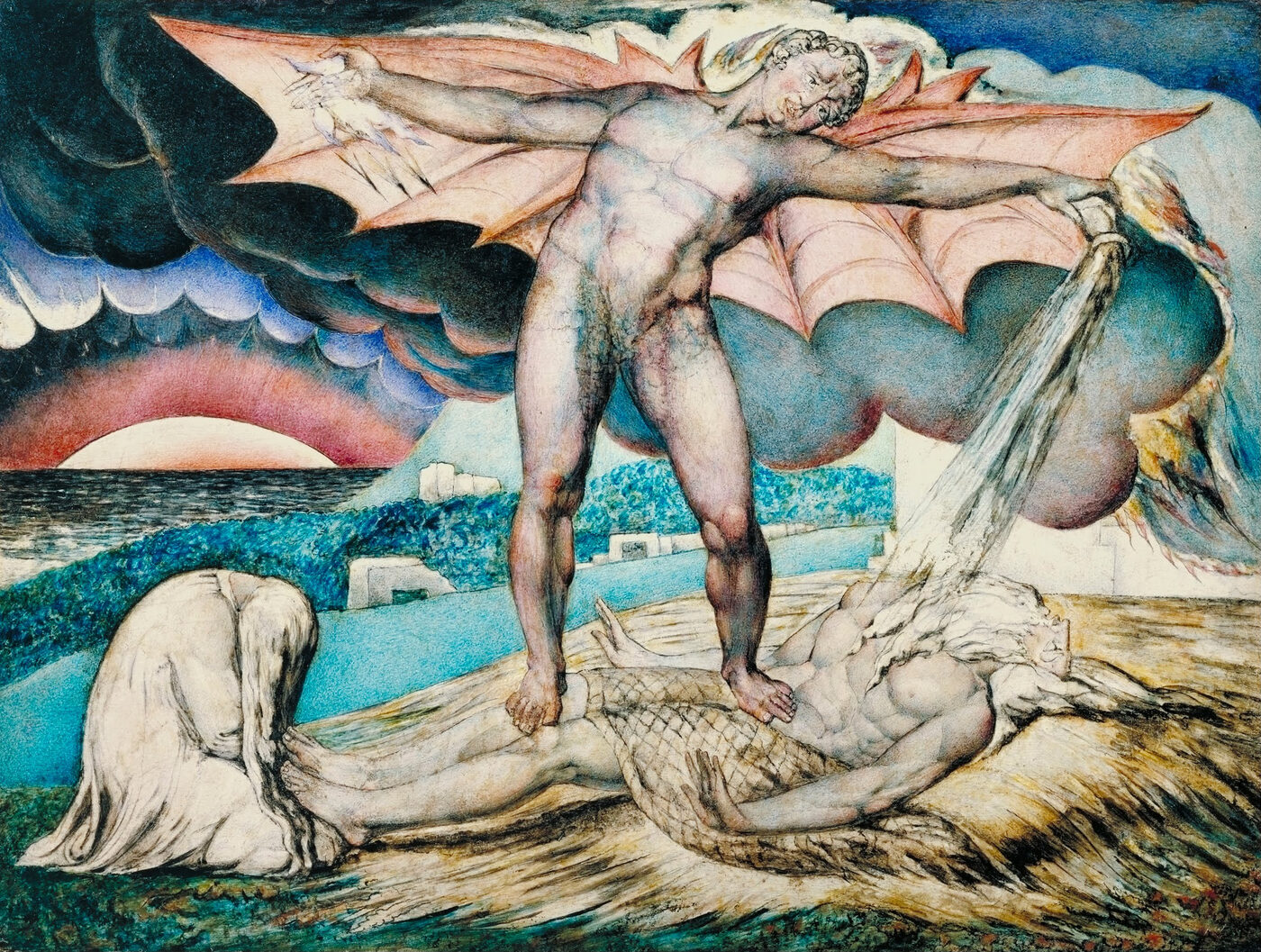
The forty days in the wilderness is the Pattern’s Mi-Fa crossing: a complete traversal of the interval from grade-1 H₄₈ conditions, under maximum Heropass pressure, with full structural integrity. The catching account treats the Pattern’s significance for the traversability of both intervals. The present paper concerns the Mi-Fa crossing specifically.
6. The Spirit of Truth as Universal Grade-2 Source
Prior to Pentecost, the grade-2 external input was channeled through particular proximate sources: catching-capable teachers, high-τ texts, the Adjuster’s action (always present), and the civilizational catching structures of the Sol-stage. The Adjuster was always the ultimate source; the proximate channels varied by era and circumstance.
Since Pentecost, the Spirit of Truth has constituted a universally distributed H₁-sourced grade-2 supply. The catching account establishes the mechanism: the Spirit of Truth adapts to the noise floor of each person’s dominant center, providing grade-2 input at the level appropriate to that person’s Mi plateau without requiring a particular institutional or personal transmission structure.
The structural consequence for the current era: the Mi-Fa interval is not harder to cross because catching-capable teachers are scarce or civilizational Sol-stage structures are absent. The grade-2 supply is universally available. What the quarantine condition (Paper A2: The Big Bang) and the current civilizational Si/Do interval increase is the noise floor — making Condition 1 (noise floor reduction) harder to achieve — and remove the institutional amplification of Conditions 3 and 4. But the Adjuster is always acting, and the Spirit of Truth is distributed. The crossing is available. It requires the volitional orientation and the practice maintained through the interval.
Open Questions
OQ1: The relationship between the Mi-Fa crossing and the dark night — are they the same event? At Mode 2, the Mi-Fa crossing is the dark night of the senses. At Mode 3, the Mi-Fa crossing involves a darkness of a different character (framework dissolution) but is not typically described as a dark night. At Mode 1, the Mi-Fa crossing may occur without any recognizable “dark” phenomenology — the moving center’s plateau may feel like boredom or restlessness rather than spiritual darkness. The structural requirement is the same at each level; the phenomenology is center-specific. The dark night terminology in the mystical tradition is primarily Mode 2’s language for the interval; its use for the Mode 3 crossing is derivative and sometimes confusing. This paper uses “Mi-Fa interval” as the structural term and reserves “dark night” for the phenomenologically specific descriptions in Papers 23 and 24.
OQ2: The relationship between the Mi-Fa crossing and what the tradition calls conversion Many conversions — particularly dramatic ones — display the structural features of the Mi-Fa crossing: external input that bypasses the existing organization; reorganization of the framework around what has arrived; the beginning of catching at a new level. The structural question is whether the Mi-Fa crossing is identical to conversion or whether conversion can occur at other structural moments. The preliminary position: conversion in the tradition’s most significant uses describes the grade-2 crossing — the structural change that marks the transition from automatic-center catching to catching with volitional ground. This corresponds most precisely to the Mode 3 → 4 Mi-Fa crossing (framework reorganization), though it may occur at any level of the ascending career at which the grade-2 input arrives sufficiently to reorganize the person’s primary catching orientation.
OQ3: Multiple Mi-Fa crossings within a single ascending career The Heptaparaparshinokh operates at every scale, which means a Mi-Fa interval appears within each level’s own sub-octave as well as at the macro-level boundaries between Modes 1/2, 2/3, and 3/4. A Mode 4 will encounter Mi-Fa intervals within the three-center catching work’s sub-octaves; a Mode 5 will encounter them within the higher emotional center’s development. The present paper has focused on the primary Mi-Fa crossings that define the transitions between the first four Men. The structural conditions (§2) apply at every scale. The specific phenomenology varies with the dominant center at each sub-level.
Paper G2½ of the Concordius Framework. The companion treatment of the Si-Do interval is Paper G5½.