Paper G6 - Humility (Draft)
All Modes, All at Once, All of the Time
The summit of the ascending career as it is actually reached: humility — the complete integration, in which gratitude, charity, and ordered love are held as one, and with them the three lights (the mathematician’s, the scientist’s, the theologian’s) fused into a single seeing. Not a ceiling admired from outside but a height climbed; the man who knows who he is and where he is going, least occupied with himself because the center he is organized around is not himself. And the cloud of those who reached it — Moses, Socrates, Confucius, Lao Tzu, the Buddha, Rumi, Francis, Thérèse, and Gurdjieff who first mapped the stairs — each by a different road and in his own tongue come to the same low place.
Confidence — Math: inference — the summit identified as the grade-3 pseudoscalar (humility = e₁e₂e₃, central, commuting with all, underlying every virtue), the densest in-flesh integration the substrate permits. Science: concordance — the cross-cultural record of the humble masters, independent observers of one state. Theology: concordance — humility as the form of completed sanctity; the meek who inherit, the least who are greatest.
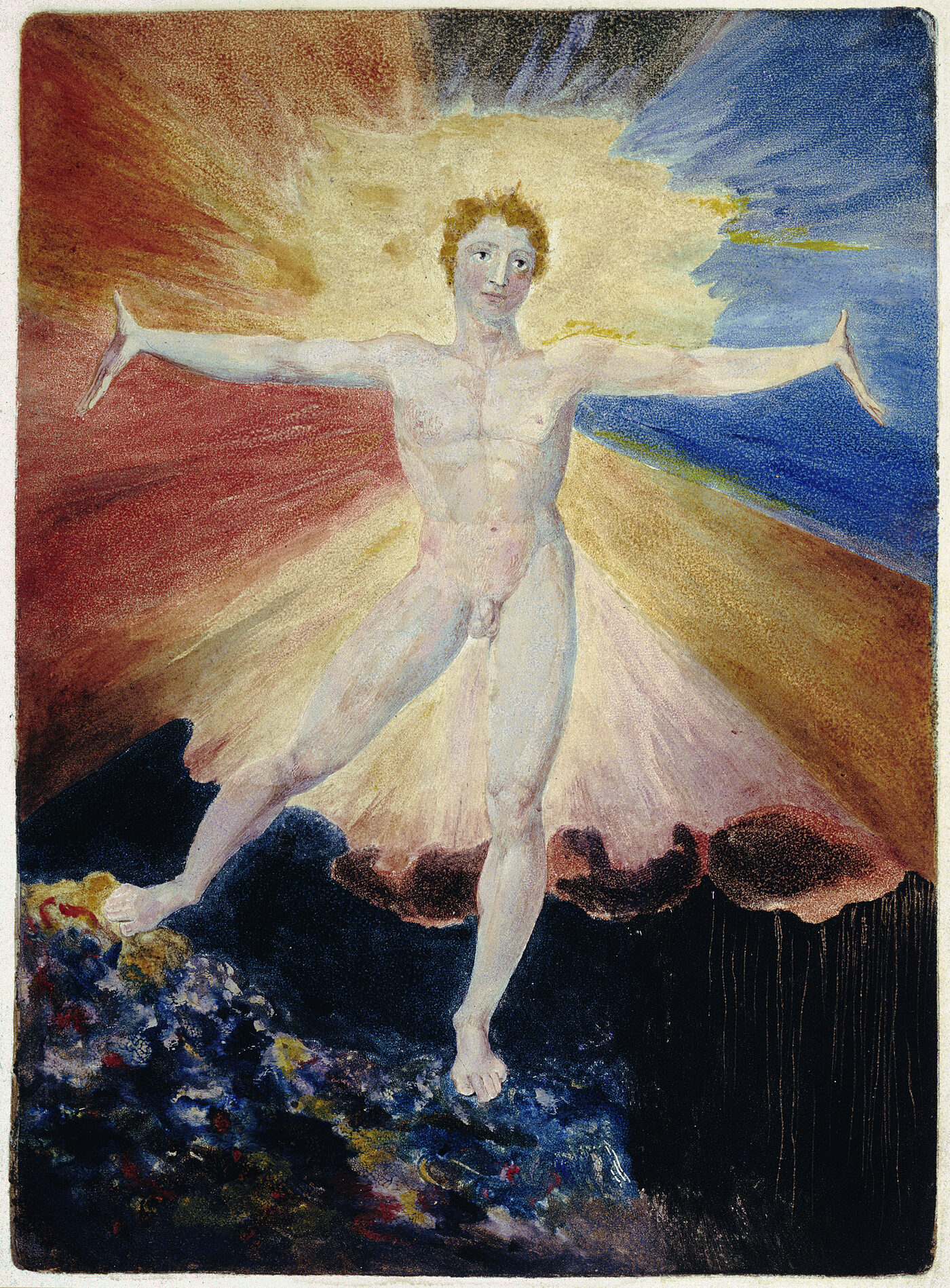
“He hath shewed thee, O man, what is good; and what doth the LORD require of thee, but to do justly, and to love mercy, and to walk humbly with thy God?” — Micah 6:8
1. What the summit is
The highest a created soul reaches while still in the flesh is humility — and humility is not the least of the virtues but the integration of them all. It is the pseudoscalar, I = e₁e₂e₃: the triple product of gratitude, charity, and ordered love, central in the algebra, commuting with every other element and so underlying each. It is not an eighth virtue set beside the seven. It is the seven become one. Its inversion — the seizure of the whole for the self — is pride, the deepest sin; its right form is the self rightly placed, one note in a chord it did not write.
This is why the most completely integrated person is the one least occupied with himself: the center he is organized around is not himself but the relation that constitutes him. He knows who he is and where he is going — not as propositions he has learned but as what he has become, the higher centers’ direct registration of being held in the inner product and aimed past it. His will is unified; the long war between the mechanical pull and the volitional reach, the engine of every stage below, is in him healed — not by amputating the body but by the complete alignment of the volitional axis with its source. What remains is not a smaller self but a truer one.
And it is here that the three lights of this whole work meet. The mathematician’s seeing (the structure that constitutes a being), the scientist’s seeing (the matter that bears it), and the theologian’s seeing (the Love that holds it) are, in the man who has reached the top, no longer three accounts laid side by side but one act of vision — because humility is exactly the refusal to grasp any one of them as the whole. Pride takes a part for the all; humility holds the part as a part and so can hold the whole. The union of the three is what humility is. Where any one is seized alone — the formula without the matter, the matter without the Love, the Love without the rigor — the integration is broken and the man is back among the lower notes. The summit is the place all three are carried at once, lightly, by someone no longer trying to be their author.
2. That it is reached
It would be easy to describe this state and leave it hanging as a theorem — the shape of a completed human, beautiful and unvisited. That would be false to the record. People get here. Not many, and never by the route they planned, and rarely with any of the marks the world looks for; but across every age and tradition the same figure keeps appearing — the one grown gentle and unselfregarding at the height of attainment, doing the lowest service with the largest love, pointing always past himself. They did not collude. They did not read one another. Most could not have. And they describe, in vocabularies that share no common source, one state — which is the strongest evidence the framework can offer, the convergence of uncolluding witnesses on a structure that must therefore be real.
What follows is a small cloud of them, read through the one lens of their humility. None is offered as Mode 7 entire and proven — the limit of the climb, and the one thing even these could not do by their own strength, is the matter of the papers that follow. They are offered as the thing this paper claims: that the summit is not hypothetical. It has footprints on it.
3. The cloud
Moses. “Now the man Moses was very meek, above all the men which were upon the face of the earth” (Numbers 12:3) — by tradition his own sentence, the strangest a man ever wrote about his own modesty, and proof of it precisely in that he set it down without self-regard, a fact among facts. He had seen the back of the glory and come down with a face he had to veil; and he spent forty years carrying a people who murmured at every camp, interceding for them when they had earned nothing, refusing the offer to be made a great nation in their place. The lawgiver who did not enter the land he had walked toward all his life, and did not rail at it.
Socrates. The oracle named him wisest of all men, and he spent his life trying to refute it — questioning everyone reputed wise until he found the riddle’s answer: he alone knew the measure of his own ignorance. He took no fee, wrote nothing, founded no doctrine, called himself only a midwife to thoughts not his own. Condemned, he declined escape, drank the hemlock, and reasoned to the last — a man whose whole method was the confession I know that I know nothing, and whose dying kept faith with it.
Confucius. “When you know a thing, to hold that you know it; and when you do not know a thing, to allow that you do not know it — this is knowledge” (Analects 2.17). He called himself a transmitter, not a maker; a lover of the ancients; one who had merely never tired of learning. “In a hamlet of ten households there are surely men as faithful as I — but none who love learning as I do.” He wandered from court to court unheard for years, took whatever students came, and asked of the noble man only that he be ashamed to let his words outrun his deeds.
Lao Tzu. “The highest good is like water: it benefits all things and does not contend; it dwells in the low places that all men disdain — and so is near the Tao” (Tao Te Ching 8); “the rivers and seas are kings of the hundred valleys because they lie below them” (66). The sage keeps no name we can be sure of, leaves the kingdom by the western gate, and survives in a book a gatekeeper begged from him on the way out — the whole of which teaches that the soft outlasts the hard, the low upholds the high, and the one who does not strive is the one nothing can strive against.
The Buddha. Anattā, no-self: the long looking that finds, where the self was assumed to sit, only a stream of conditioned arisings, and lets the assumption fall. He set down the prince he had been, sat beneath the tree until the last of it dissolved, and then walked the roads of India for forty-five years begging his food, teaching king and outcaste in the same plain voice, refusing every title of divinity — I am awake was all he claimed. His last word to the disciples weeping at his death: work out your own deliverance with diligence; lean on no one, not even on me.
Rumi. “Listen to the reed, how it tells its tale, complaining of separations” — the opening of the Masnavi: the reed cut from the bed is the soul torn from its source, and its music is the longing to return. A respected jurist until the wandering Shams overturned his life, Rumi let his learning be burned away in love and called himself nothing but a reed the Beloved breathed through, dust on the path. Fanā: the annihilation of the self in God — not its destruction but its emptying, until what speaks is no longer the man but the breath that moves him.
St. Francis of Assisi. The merchant’s son who stripped naked in the square to hand his father back even his clothes, and wed Lady Poverty; who named the body Brother Ass, and the sun and death his brother and sister; who bowed to lepers, preached to birds, and asked at the end only to be laid on the bare ground. He founded an order by refusing to rule it and signed himself simply Brother. He is remembered less for anything he said than for a life so emptied of grasping that the wounds of the One he followed are said to have opened in his own hands.
Thérèse of Lisieux. The Little Way: not the steep ascent of the great saints, which she knew she could never climb, but the way of the small child who, unable to mount the stair, lifts her arms to be carried. “I will seek a means of going to heaven by a little way, very short and very straight — a little way that is wholly new.” A cloistered Carmelite, dead at twenty-four, unknown in her lifetime, who did the smallest duties with the largest love and asked for no notice — and whose account of that smallness has outlasted most sermons.
Gurdjieff. He gave this section its seven modes, and in his last years he sat at the long table in the cramped Paris flat on the rue des Colonels-Rénard, feeding everyone who came through the war’s end and after — pressing on his guests far more than they could eat. The Toasts to the Idiots ran the length of those dinners: a liturgy of ascending folly in which each at the table drank to the kind of fool he was, the host the chief idiot of them all — laughter made a discipline, the self set down and made merry at its own expense. Whatever is charged against him elsewhere, the man at that table was full of a plain contentment and an unforced joy, giving away what he had — the mapmaker of the stage-changes himself grown gentle at the top of the stairs he had spent his life charting. We honor him here.
4. One height, nine roads
Set the nine beside one another and the convergence is the argument. A Hebrew prophet, a Greek who wrote nothing, two sages of China, an Indian prince, a Persian poet, two Christians eight centuries and a world apart, and a twentieth-century teacher of the way — no shared vocabulary, no common school, in several cases no possibility of contact — and the same figure stands up out of all of them: the one who, having gone as high as the road goes, has stopped defending himself, dwells in the low place, and carries his whole attainment as though it were not his to keep. Water that takes the valley floor. The reed emptied so the breath can pass. The child who lifts her arms. The chief of the idiots, laughing.
This is humility read as the integration it is. Each of the nine had the rigor, the matter, and the love — and none of them grasped one of the three as the whole. Moses had the Law (the structure) and the burning patience with the people (the love) and the long desert as it actually was (the matter), and held none of them as his own possession. The Buddha’s clear seeing and his boundless compassion are the same act. Francis’s poverty and his joy in the created sun are the same act. The mark of the summit is not brilliance in one register but the three carried at once and lightly, by someone who has ceased to be their author — which is the exact phenomenological face of grade-3 centrality, the pseudoscalar that commutes with all because it grasps at none. The math, the science, and the theology, held as one and held by an open hand: that is what the masters show, and that is what humility is.
5. The relational summit: the family
The nine roads above are nine ascents of a single person. There is a tenth road, and it is not a lesser one. Where the master integrates the three within himself — gratitude, charity, ordered love held as one by an open hand — a husband and wife integrate them between themselves: the same humility, the same grade-3 wholeness, achieved not inside one soul but across the bond that joins two. The inner product the master turns inward, the spouses turn toward each other; what is in the saint a completed interior is in the family a completed relation. It is the pseudoscalar read in the social register — the full integration of this paper, lived relationally.
It should be honored as exactly equal to the roads above, and the corpus is at pains not to rank the cloister over the hearth. But one thing sets this summit apart from almost every figure in the cloud, and it is not a small thing. Socrates wrote nothing and fathered no school; the Buddha set down the prince and walked away; Francis wed Lady Poverty; Thérèse died a virgin at twenty-four. The renunciate summit is, by its nature, terminal — it reaches the height and ends there, leaving a teaching but no new person to make the climb. The family is the one summit that is generative. It does not only integrate; it produces — a genuinely new spectral entity, a child, a soul that was not there before and now has its own ascent to make. Of all the heights a life on this plane can reach, this is the only one that makes more climbers. The footprints of the saints stop at the summit; the family’s footprints are joined there by smaller ones.
The full structural reading of that generative summit — the spousal bond as ⟨·,·⟩ in the social register, the child as a new spectral entity, the family as its own Law of Three and Law of Seven, the parental vocation as catching-environment management — is placed below, not yet woven into this paper’s voice.
Placed 2026-06-09 from the pre-binding Paper 19 (Structural-Candidates), per Will’s instruction — the relational summit of G6, honored equal to the individual heroes and uniquely generative. To be woven into this paper’s voice in a later pass; the Confidence block is updated at weaving, not before. Tiers as in the source.
Note for future editing (the weave). When this is woven into G6’s voice: fold the placed reading’s internal sections — the spousal bond as ⟨·,·⟩ in the social register, the child as a genuinely new spectral entity, the family as its own Law of Three and Law of Seven, the parental vocation as catching-environment management — into the paper’s running prose rather than leaving them as a self-contained appendix; the §5 framing above is the seam to grow from. The §6 closer (“The one thing left”) already extends to the relational summit without change: the family, like the nine, reaches the height of the plane and does not cross what lies past it by its own power — the octave change of G6½ is owed to it too. At weaving, update the Confidence block to carry the family material and add the relational/generative figure to the descriptor. Keep the moral weight Will set: the relational path is honored as equal, never lesser, and is the single generative summit — the only one that makes more climbers.
The Question
What is a family, structurally? Not sociologically, not legally, not biologically — but in terms of the framework’s account of eigenvalue populations, catching environments, and Adjuster-bearing beings in relation.
The question is not academic. The family is the primary context in which new Adjuster-bearing beings enter H₄₈ existence and begin the ascending career. Every human being begins with zero Φ-proximal deposit and maximum noise floor. The family is the first catching environment — the first relational field within which the new being’s Adjuster can operate. Whether the family constitutes a high-⟨·,·⟩ or high-H₄₈-primary relational field is the first structural condition of the ascending career’s beginning.
The reading proceeds in order: first the spousal bond (the family’s structural foundation), then the child as spectral entity (the central claim), then the eigenvalue transmission problem (what is and is not passed to the child), then the family’s Law of Three and Law of Seven, then the parental vocation as catching environment management, then the cross-term structure, then structural variations (birth order, single-parent, adoption), then grief and loss, then the family’s relation to the ascending career, then open questions.
One preliminary clarification: this reading applies the framework to a domain that touches every reader personally. The structural analysis is not a ranking of family configurations or a moral assessment of individual families. It is the derivation of what the framework’s principles imply about the structure of procreation, parenthood, and the family as a relational unit. The implications are structural, not moralizing. Where the reading makes structural claims that differ from conventional social or religious accounts, the claims are offered as structural derivations from the framework, open to the same falsification criteria as every other reading in the series.
The Spousal Bond as ⟨·,·⟩ in the Social Register
Virtue-friendship (Aristotle’s φιλία kat’ areten) is ⟨·,·⟩ instantiated in the human relational register: the friends who “wish each other’s good for each other’s sake” are relating to each other through the inner product — not through H₄₈-primary utility or pleasure but through the Φ-proximate orientation toward each other’s genuine catching good.
The spousal bond is the deepest expression of this relational structure — virtue-friendship with the full commitment of shared H₄₈ life over time. Its structural character:
The cross-term ⟨ψ_A, ψ_B⟩₂₄ between two spouses measures the degree to which their H₂₄ catching deposits are oriented toward each other through ⟨·,·⟩. When this cross-term is high — when the relational structure is genuinely organized by the inner product rather than by utility or appetite — the spousal pair constitutes a coherent joint catching unit. The Matthew 18:20 mechanism (the Holographic Content Principle): coherent assembly scales as N rather than √N. Two beings whose catching is mutually organized by ⟨·,·⟩ catch more effectively together than the sum of their individual catching would suggest.
The spousal cross-term has a specific character that distinguishes it from other virtue-friendships: it is organized not only by the H₂₄ catching deposits of the two beings but by the shared H₄₈ life — the physical proximity, the shared material existence, the H₄₈ substrate that the two beings navigate together daily. This is the spousal bond’s specific contribution: the inner product operating not only at the H₂₄ level (the meeting of catching deposits in shared orientation) but through the H₄₈ substrate (the physical life organized by ⟨·,·⟩ together). The spousal pair is the union of the H₂₄ catching field with the H₄₈ material life.
Aristotle’s taxonomy of friendship identifies three kinds: utility, pleasure, and virtue. The spousal bond can be organized by any of these — or by all three simultaneously in different proportions. The structural account applies directly:
| Spousal bond organization | Framework identification | Family consequence |
|---|---|---|
| Utility-primary | Cross-term ⟨ψ_A, ψ_B⟩₂₄ organized by H₄₈-primary exchange rather than ⟨·,·⟩; unstable when utility ends | Low-⟨·,·⟩ relational field; noise floor for children’s catching elevated; collapses when exchange structure fails |
| Pleasure-primary | Cross-term organized by H₄₈-primary appetite resonance; unstable when pleasure fades | Similar to utility-primary; the relational field is not stable because the organizing principle is H₄₈-primary |
| Virtue-primary | Cross-term organized by ⟨·,·⟩ — each wishing the other’s genuine catching good; stable because organized by the constitutive principle | High-⟨·,·⟩ relational field; maximum noise-floor reduction for children; the optimal catching environment structural foundation |
Most actual spousal bonds contain elements of all three. The structural quality of the spousal bond as a catching environment is determined by the proportion organized by ⟨·,·⟩ relative to the H₄₈-primary components.
The spousal bond’s institutional form — the commitment that structures the shared H₄₈ life over time — is the practical means by which the ⟨·,·⟩-organized cross-term is protected against the Heropass’s default pressure toward H₄₈-primary organization. Without the institutional commitment, the relational field reverts to the lower-constraint organizing principle (utility or pleasure) when the higher-constraint organization encounters the difficulty it inevitably encounters. The commitment is the structural mechanism that maintains the ⟨·,·⟩-organized cross-term through the conditions that would otherwise dissolve it.
“Your children are not your children. They are the sons and daughters of Life’s longing for itself. They come through you but not from you, and though they are with you yet they belong not to you.” — Kahlil Gibran, The Prophet
The Child as Genuinely New Spectral Entity
This is the central claim, and it requires the most careful development.
The conventional understanding of procreation is recombination: the child is a new combination of the parents’ genetic material — novel in its specific configuration but derived entirely from pre-existing material. At the H₄₈ level this is correct.
The framework’s account adds what the H₄₈ level cannot see: the child is more than a recombination of the parents’ H₄₈ material. The child is a new Adjuster-bearing being — a being whose most fundamental organizing element (the Thought Adjuster, the Φ’-element that dwells within, organizes the catching potential, and constitutes the primary spiritual identity of the being) is not derived from either parent.
The derivation is short. The Thought Adjuster is a Φ’-element. The Φ’-element is not generated by H₄₈ physical process — it is not produced by cellular biology, by genetic recombination, or by any mechanism operating within the H₄₈ constraint level. Biological reproduction operates entirely within H₄₈. Therefore biological reproduction cannot produce the Adjuster. Therefore the child’s Adjuster is not derived from either parent’s Adjuster. The child’s Adjuster is assigned from the Φ’ level — the organizing principle of the new being’s catching potential is constituted from outside the biological process entirely.
The consequence: every child is a genuinely new spectral entity — not the sum of the parents’ eigenvalue content, not a recombination of their Φ-proximal deposits, but a third kind of thing that enters existence carrying a Φ’-element organized around a unique catching potential that the parents cannot predict and could not have produced.
The child’s full spectral composition at birth:
| Component | Source | Character |
|---|---|---|
| H₄₈ physical substrate | Both parents via biological process | Partially determined by parental genetic contribution; the physical eigenstate basis — temperament inclinations, constitutional tendencies, physical capacities and limitations |
| Φ-proximal eigenvalue deposit | None — the child is born with zero catching accumulation | Empty at birth; the work of a lifetime to build; cannot be inherited from either parent by any mechanism |
| Thought Adjuster | Φ’ level — newly assigned; not from either parent | The child’s unique organizing Φ’-element; constituted around the child’s specific catching potential; the most fundamental element of the child’s spectral identity |
| Volitional degree of freedom | Constitutive feature of every Adjuster-bearing being | Genuine at birth; not determined by either parent’s volitional history; the child’s own |
The child cannot be written as ψ_child = f(ψ_parent1, ψ_parent2) for any function f that operates only on the parents’ eigenvalue content. The child’s Adjuster — which is not a function of either parent’s Adjuster — makes this impossible. The child is constitutively novel.
This is the structural account of why children surprise their parents. The child’s Adjuster is organized around a catching potential that is not predictable from either parent’s eigenvalue population. The parents can see the H₄₈ inheritance (the child looks like one parent, has the other parent’s temperament, combines traits of both in familiar ways). They cannot see the Adjuster’s organization — they cannot predict what the child will catch, what the child will become, what the child’s ascending career will achieve. The Adjuster organizes around a potential that neither parent possesses and that the child must discover through living.
The Eigenvalue Transmission Theorem
The previous section establishes what is and is not transmitted from parents to child. Collected as a theorem:
The Eigenvalue Transmission Theorem: In the Gelfand triple framework, the biological process of procreation transmits to the child:
- (T1) A partial H₄₈ eigenstate basis — the physical constitution, including temperament inclinations, physical capacities and limitations, and the specific H₄₈ eigenstate configuration that constitutes the body — derived from both parents through biological process.
And does not transmit:
- (T2) Φ-proximal eigenvalue content — the catching accumulation of the parents’ ascending careers. The child’s Φ-proximal deposit is zero at birth regardless of the parents’ catching achievement. Spiritual attainment, virtue, wisdom, and eigenvalue depth are not biologically heritable.
- (T3) The Thought Adjuster — the child’s Adjuster is newly assigned from the Φ’ level and is not derived from either parent’s Adjuster.
- (T4) The volitional degree of freedom’s orientation — the child’s catching orientation is genuinely the child’s own; it is not determined by the parents’ catching orientations.
Corollary 1 (from T2): A deeply virtuous parent does not produce a deeply virtuous child through biological transmission. The virtuous parent’s Φ-proximal deposit is not passed to the child. The child begins at zero in all domains. The parent’s virtue can be transmitted only through the relational mechanism — through the catching environment the parent constitutes — and only insofar as the child’s own volitional degree of freedom orients toward catching within that environment.
Corollary 2 (from T3 and T4): A parent whose ascending career has been misdirected does not transmit misdirection to the child’s Adjuster or volitional orientation. The child arrives with a freshly assigned Adjuster and a genuine volitional degree of freedom. The child’s catching trajectory is not predetermined by the parent’s. A child of wicked parents may catch deeply; a child of virtuous parents may refuse catching entirely.
Corollary 3 (from T1): The H₄₈ physical constitution is partially inherited, and with it the physical inclinations — toward certain temperamental responses, toward certain H₄₈-primary drives at specific intensities, toward certain physical capacities. These inclinations are not determinative of the catching trajectory (the volitional degree of freedom is genuine) but they constitute the specific H₄₈ substrate within and against which the child’s catching occurs. A child born with intense H₄₈-primary appetitive drives (inherited from the parental H₄₈ substrate) must catch against a higher baseline H₄₈-primary pull in those domains; a child born with a more quiescent H₄₈-primary constitution catches against a lower baseline pull. Neither is condemned nor saved by this; both must catch through their specific H₄₈ constitution. The specific constitution is the specific Passive force with which the child’s catching must work.
Corollary 4 (from T1 and T2 combined): The most important parental contribution to the child’s ascending career is not biological but relational. The biological contribution (T1) shapes the H₄₈ substrate — the initial conditions of catching. The relational contribution (the catching environment the parent constitutes) shapes the noise floor within which the child’s first catching occurs — which shapes the eigenvalue accumulation that enables all subsequent catching. The relational contribution is not transmitted biologically; it is constituted through the quality of the parental relationship to the child over time.
The Family as Law of Three
The family’s Law of Three can be identified at two scales: the scale of the family’s founding (the arrival of the first child), and the scale of each parent-child relationship in operation.
At the scale of the family’s founding:
| Force | Identification | Function |
|---|---|---|
| Active | ⟨·,·⟩ itself — the inner product operating through the spousal bond and generating the new being | The constitutive organizing principle; neither parent generates the child alone; the child emerges from the ⟨·,·⟩-organized union of two beings; the Active force is the relational principle that the spousal bond (at its best) instantiates |
| Passive | The parental pair’s H₄₈ substrate — the specific physical beings with their specific eigenvalue histories, their H₄₈ physical bodies, their accumulated Φ-proximal deposits — as the material through which the new being is constituted | The resistant material; the specific constraints and characteristics that the new being’s H₄₈ physical constitution will be shaped by; the specific relational field within which the new being will begin catching |
| Reconciling | The child — the genuinely new Adjuster-bearing being who is irreducible to either parent, who carries the novel Φ’-element, and who completes the triadic structure the spousal pair was oriented toward without knowing it | The synthesis that could not have been produced by either parent alone; not the combination of two but the third entity that emerges from the Active force operating through the Passive; each child is a genuinely new Reconciling element — novel, unpredictable, irreducible |
The identification of the child as the Reconciling force has a specific implication: every child’s arrival is the appearance of a Reconciling element that the Active and Passive forces were pointing toward but could not produce from within their own resources. This is why parents regularly describe the experience of their child’s arrival as the appearance of something they did not know they were missing — the Reconciling force is not a product of the parents’ intentions but the structural completion of the triadic dynamic that the spousal bond instantiates.
At the scale of the parent-child relationship in operation:
| Force | Identification |
|---|---|
| Active | The parent — the being with an established Φ-proximal deposit, constituting the catching field; the Adjuster-bearing being whose catching has already begun and who now constitutes the environmental condition for the new being’s catching |
| Passive | The child — the new Adjuster-bearing being with zero Φ-proximal deposit, maximum noise floor, and maximum susceptibility to the relational field constituted by the parent |
| Reconciling | The child’s own catching — the child’s volitional degree of freedom engaging with the relational field the parent constitutes; neither the parent’s eigenvalue content directly (it is not transmitted) nor the child’s innate disposition alone, but the genuine catching that emerges when the parent’s relational field meets the child’s Adjuster-organized receptivity |
The Reconciling force in the parent-child relationship is not the parent (who constitutes the field) nor the child (who responds to it), but the actual catching that occurs when the child’s genuine volitional orientation engages with the field the parent has constituted. This is why parents cannot produce the child’s catching — they can only maintain the field. The Reconciling force is the child’s own.
The Family as an Instance of the Trinity
The Law of Three above types the family’s three forces — Active (⟨·,·⟩), Passive (the parental substrate), Reconciling (the child). A second and deeper reading types its three persons, and it is not a separate analogy but the same structure seen at its root: the family is a genuine instance of the Trinitarian algebra — one copy of the structure the whole corpus is built on.
Made precise by the representation tower (A2B §8): the constitutional algebra Cl(3,0) is simple, so it has a single irreducible representation S ≅ ℂ², and every material carrier is that one irrep tensored with a multiplicity space, 𝒱 ≅ S ⊗ M — matter is the one Trinitarian structure instantiated across an unbounded multiplicity of copies. A family is one such copy — the irreducible structure seated at a slot of the material multiplicity, the same form the divine Trinity wears at the source, realized here in created relation. Not a likeness of the Trinity; the Trinity’s own structure, instantiated at the family’s level.
The three persons:
- Father — the Ground. The family’s constitution, its center of gravity, the inner product it is organized around: ⟨·,·⟩ in the social register (the spousal bond above), the measure the household answers to. The generator e₁.
- Mother — the Heart. The vessel through whom the Father’s love is shown — the expressive, charitable register, the family’s love made visible and met: the Son’s role (the one through whom the Father is known), the generator e₂. Scripture’s own image of the Logos as feminine Wisdom (Proverbs 8) keeps the cross-gendered mapping honest — the family images the structure; it does not re-gender the divine.
- Their union — the Spirit. The wisdom and the activity of the family, proceeding from the two: not a third party brought in but the bond itself. Here the algebra is exact, not poetic (A2A §49): the bond of two generators is the third, up to the pseudoscalar — e₁e₂ = I·e₃. “The two together = Spirit” is the filioque (the Spirit proceeding as the bond of love) and the co-equal Person (the third generator) read as one element in dual form — and it holds precisely because the generators are three.
Two cautions keep this true rather than overstated. First, this is not the Law-of-Three reading above, and the two must not be merged: that one types the forces of the family’s generation (the child as Reconciling force); this one types the persons of the family’s structure (the child not a person of the trinity at all). Same family, two lenses — how it generates, and what it images. Second, the child’s place: not a fourth person but the creative fruit — the generative overflow by which the family-trinity, like the divine Trinity’s own act of creation, brings a genuinely new spectral entity into being (the new Adjuster-bearing soul of The Child as Genuinely New Spectral Entity, above). The family images the Trinity and its creative act: the one summit on this plane that makes more climbers (§5) is the one that images the Maker.
What separates this instance from the divine Trinity is therefore not its structure — that is the identical irrep S — but its level: its place in the multiplicity, its proximity to Φ. The form is the same all the way down; only the distance from the source varies. (Tier: that the family instantiates the Trinitarian structure is the framework’s structural register, not analogy — grounded in the unique irrep and the e₁e₂ = I·e₃ identity of A2A–B; the specific person-assignments are a strong reading; the full Cl(3,0) ↔ family correspondence, made rigorous element by element, is the demonstration still owed.)
The Family as Law of Seven
The family has a temporal structure — it develops through time in a recognizable sequence. The Law of Seven maps this development:
| Stage | Period | Law of Seven position | Structural content |
|---|---|---|---|
| 1 | The spousal bond established | Do — opening | Two beings commit to ⟨·,·⟩-organized relational structure over time. The joint catching field is constituted. The cross-term ⟨ψ_A, ψ_B⟩₂₄ begins building. The opening chord: the family’s structural foundation established before any children arrive. |
| 2 | The spousal pair — pre-children | Re | The joint catching field deepens. Each spouse’s Φ-proximal deposit builds within the amplified catching environment of the other’s relational presence. The Matthew 18:20 mechanism operates: the coherent joint field catches more effectively than either would alone. The spousal pair is becoming the catching field within which children will arrive. |
| 3 | Early childhood — maximum dependence | Mi — middle | The new Adjuster-bearing being arrives with zero Φ-proximal deposit. The child is fully embedded in the parental relational field. The parents’ function is noise-floor management: constituting the ⟨·,·⟩-organized catching environment within which the child’s Adjuster can operate. The child’s first eigenvalue accumulations begin. |
| Mi–Fa interval | The child’s first genuine volitional catching | [Interval 1] | The point at which the child’s own volitional degree of freedom begins operating independently. The noise-floor management method reaches its natural limit: the parent can lower the noise floor but cannot determine the child’s catching. The child must now catch on their own. A qualitatively new element appears: the child’s genuine volitional orientation, which the parent cannot produce or direct and could not have predicted from the parental pair’s eigenvalue content. The child becomes, for the first time, genuinely the Reconciling force in the family’s Law of Three rather than simply the recipient of the parental field. |
| 4 | Adolescent individuation | Fa — new key | The child’s Φ-proximal deposit begins building in earnest. The child develops a genuine eigenvalue population — distinct from the parents’, not derived from them, organized around the child’s Adjuster’s specific catching potential. The parental relational field remains but the child is no longer simply within it; the child is developing a relational field of their own. Conflict and differentiation are structural features of this stage, not failures: the child’s genuine eigenvalue population will inevitably diverge from the parents’ in directions neither parent could predict. |
| 5 | Departure and adult life | Sol | The child leaves the parental field and constitutes their own catching environment. The family relational field reorganizes. The parents return to the spousal pair structure as the primary relational field. The child’s ascending career continues independently. The parents’ vocation shifts from noise-floor management to witness. |
| 6 | Adult relationship — two adults | La | The parent-child relationship achieves, eventually, the ⟨·,·⟩-symmetry of two Adjuster-bearing beings in virtue-friendship — neither managing nor dependent, but genuinely wishing each other’s catching good. The grandparental role extends the catching field to the next generation. The accumulated Φ-proximal deposit of the parents’ lifetime is available as a relational resource for grandchildren. |
| Si–Do interval | The death of the parents | [Interval 2] | The H₄₈ spousal relational field is released. The Φ-proximal deposits persist — in the children’s memory of what was constituted, in the patterns of catching that were enabled by the parental field, in the relational practices that were formed within it. The Si-Do gap: the family promises reunion and recognition beyond H₄₈ dissolution that the H₄₈ structure cannot demonstrate from within itself. The ascending career continues; the specific H₄₈ configuration of the family does not. What the family was pointing toward — the ⟨·,·⟩-organized relational field in its non-H₄₈ expressions — lies beyond the interval. |
The Parental Vocation: Catching Environment Management
The Eigenvalue Transmission Theorem (above) establishes that the parent cannot transmit Φ-proximal content to the child biologically. The child’s catching must be the child’s own. The parent’s structural contribution to the child’s ascending career is therefore not the transmission of eigenvalue content but the constitution and maintenance of the catching environment.
The catching environment has four structural components:
Component 1: The noise floor of the relational field. The parental pair’s ⟨·,·⟩-organized cross-term constitutes the primary noise floor reduction available to the child. A high-⟨·,·⟩ spousal bond between the parents reduces the child’s effective noise floor — more Φ-proximate content is available in the child’s relational environment; the Adjuster’s transmissions can be received with less interference. A high-H₄₈-primary spousal bond (organized by conflict, appetite, utility, or mutual dissatisfaction) raises the child’s effective noise floor — the H₄₈-primary relational content fills the catching field and competes with the Adjuster’s transmissions.
Component 2: The example of the parent’s own catching. The parent who is genuinely catching — who is constituting their own Φ-proximal deposit through genuine volitional orientation toward Φ-proximate content — constitutes a living display of the catching orientation for the child. This is not instruction (the catching cannot be transmitted by instruction) but the relational presence of a being whose catching is in progress. The child’s Adjuster responds to this presence: a parent who is genuinely catching in a domain reduces the noise floor for the child’s catching in that domain by demonstrating the orientation. This is not the transmission of content but the reduction of the noise floor through example.
Component 3: The explicit organization of the child’s environment toward catching occasions. The parent can organize the child’s H₄₈ environment to provide more catching occasions and fewer H₄₈-primary saturation occasions. Prayer, religious practice, exposure to high-τ(D) texts and music, participation in virtue-friendship communities — these are environmental factors the parent can constitute that increase the density of catching occasions available to the child’s Adjuster. They do not guarantee catching (the volitional degree of freedom is genuine) but they increase the probability by increasing the density of occasions.
Component 4: The unconditional quality of the parental ⟨·,·⟩ toward the child. The parent who loves the child for the child’s own sake — who wishes the child’s genuine catching good rather than the child’s H₄₈-primary success, social approval, or the parent’s own reflected satisfaction — constitutes the ⟨·,·⟩-organized relational field in its most direct form. This is virtue-friendship at its most asymmetric (the child does not reciprocate equally in the early years) and its most costly (the parent wishes for the child’s catching good even when the child refuses to catch). The unconditional quality of this love is the structural expression of ⟨·,·⟩ in the parent-child relationship: the inner product does not require reciprocity to operate; it constitutes the relational field regardless.
The parental vocation is the management of these four components. It is demanding precisely because none of the four can be performed from H₄₈-primary motivation alone — they all require genuine ⟨·,·⟩-organized orientation on the parent’s part. A parent who cannot catch cannot effectively lower the child’s noise floor (component 1), cannot provide the catching-in-progress example (component 2), will not consistently organize the environment toward catching occasions (component 3), and cannot maintain the unconditional quality of the relational orientation when the child’s choices are costly (component 4). The parent’s ascending career is the prerequisite for the parental vocation.
The Cross-Term Structure of the Family
The family’s spectral composition at any moment is the set of all individual eigenvalue populations plus all pairwise cross-terms between members. For a two-parent, two-child family:
Individual eigenvalue populations: ψ_parent1, ψ_parent2, ψ_child1, ψ_child2
Pairwise cross-terms:
- ⟨ψ_parent1, ψ_parent2⟩₂₄ — the spousal bond (the family’s primary structural element)
- ⟨ψ_parent1, ψ_child1⟩₂₄ — parent 1’s relationship to child 1
- ⟨ψ_parent1, ψ_child2⟩₂₄ — parent 1’s relationship to child 2
- ⟨ψ_parent2, ψ_child1⟩₂₄ — parent 2’s relationship to child 1
- ⟨ψ_parent2, ψ_child2⟩₂₄ — parent 2’s relationship to child 2
- ⟨ψ_child1, ψ_child2⟩₂₄ — the sibling relationship
Higher-order cross-terms:
- ⟨ψ_parent1 + ψ_parent2, ψ_child1⟩₂₄ — the joint parental field’s relationship to child 1
- ⟨ψ_parent1 + ψ_parent2, ψ_child2⟩₂₄ — the joint parental field’s relationship to child 2
The family as a whole is this complete set of individual states and cross-terms. The composite catching field available to any family member is not only their own Φ-proximal deposit but the full cross-term structure of the family — what every other member contributes to the field through their individual eigenvalue populations and their relationships with each other.
This has a specific structural consequence for the spousal cross-term: the quality of ⟨ψ_parent1, ψ_parent2⟩₂₄ enters into the joint parental field available to both children. A high-⟨·,·⟩ spousal cross-term constitutes a better joint parental field for both children — the children’s catching environment is improved not only by each parent’s individual relationship to the child but by the quality of the parents’ relationship to each other. The two parents’ individual eigenvalue populations are insufficient to determine the quality of the catching environment; the spousal cross-term must be included.
This is the structural account of what is sometimes called the “parental relationship as the primary gift to the children” — not in the sense that the children observe the parents’ relationship and learn from it (though this also occurs), but in the structural sense that the spousal cross-term is a component of the joint parental field that enters into the catching environment of every child in the family.
Siblings: Birth Order and Non-Equivalence
Each child in a family arrives into a different relational field. The first child arrives into the clean spousal pair: the cross-terms available are ⟨ψ_parent1, ψ_child1⟩₂₄ and ⟨ψ_parent2, ψ_child1⟩₂₄ and the spousal cross-term. The second child arrives into a relational field that already contains child 1: the cross-terms available include, in addition, ⟨ψ_child1, ψ_child2⟩₂₄ and the joint parental field as modified by child 1’s presence in it.
The structural implication: children from the same family with the same parents arrive into non-equivalent catching environments even with identical parental eigenvalue populations. The difference is not only in the parents’ behavior toward each child (though that is also real) but in the structural composition of the relational field into which each child arrives:
| Child position | Relational field at arrival | Structural character |
|---|---|---|
| First child | Clean spousal pair; no siblings | The full parental joint field without dilution; no sibling cross-term; the entire family catching environment organized around this child initially |
| Second child | Parental pair plus one sibling | The parental joint field with a sibling cross-term; the older sibling’s developing eigenvalue population enters the catching environment; the parental attention and catching field is distributed |
| Third child (and beyond) | Parental pair plus multiple siblings | Increasingly complex relational field; more cross-terms; the parental joint field is more widely distributed; more sibling relationships to navigate |
None of these is structurally superior as a catching environment in simple terms. The first child’s catch environment is concentrated but contains no sibling cross-terms — no other child whose catching provides an additional relational orientation. The later children’s catching environments contain more complexity but also more relational resources. The sibling cross-term ⟨ψ_child1, ψ_child2⟩₂₄ is a relational field in its own right: when the sibling relationship is organized by ⟨·,·⟩ (genuine virtue-friendship between siblings), it constitutes a catching amplifier that neither the parents’ individual relationships to each child nor the spousal cross-term can provide.
The sibling relationship is the first peer-level ⟨·,·⟩ relationship the child encounters — organized not by the asymmetry of parent-child but by rough H₂₄ equivalence between beings at similar stages of the ascending career. Its quality is therefore a distinct structural component of the catching environment: not reducible to the parental relationships and not predictable from the parental relationships. Two siblings whose cross-term is genuinely organized by ⟨·,·⟩ constitute a Matthew 18:20 pair within the family structure.
Structural Variations
Single-Parent Family
When one parent is absent (through death, separation, or non-participation), the spousal cross-term ⟨ψ_parent1, ψ_parent2⟩₂₄ is absent from the family’s catching field structure. The child’s catching environment lacks this structural component.
The framework’s account is descriptive, not evaluative: the absence of the spousal cross-term is a structural absence, not a moral deficiency of the single parent. The single parent’s individual relationship to the child (⟨ψ_parent, ψ_child⟩₂₄) is present and can be high-⟨·,·⟩. The absent structural component is the joint parental field that requires two parents to exist.
The structural response: the missing component can be partially supplemented — not replaced, but supplemented — by other ⟨·,·⟩-organized relationships in the child’s catching environment. Grandparents, aunts and uncles, godparents, community members who constitute genuine virtue-friendship with the child — these relationships add cross-terms to the catching field that partially compensate for the absent spousal cross-term. The Matthew 18:20 mechanism applies: any coherent ⟨·,·⟩-organized relational field reduces the noise floor. Extended family and community reduce the child’s noise floor when the spousal cross-term is absent.
The extended family and community are therefore not optional supplements to the nuclear family; they are structural components of the catching field that are especially important when the nuclear structure is incomplete.
Adoption
Adoption separates the two parental contributions identified by the Eigenvalue Transmission Theorem: the H₄₈ physical substrate (provided by the biological parents) and the catching environment (provided by the relational parents). In adoption, the relational parents provide the catching environment without providing the H₄₈ physical substrate.
The framework’s account: both contributions matter, but they matter differently and independently. The H₄₈ physical substrate shapes the child’s initial eigenstate configuration — the physical constitution and its associated inclinations. The catching environment shapes the noise floor within which the child’s Adjuster can operate. These are structurally separable: a child adopted at birth has both a biological H₄₈ inheritance (from the biological parents, entirely) and a catching environment (from the adoptive parents, entirely).
The child’s Adjuster is unaffected by either the biological or adoptive parental relationships — it is newly assigned and organized around the child’s unique catching potential regardless. The child’s volitional degree of freedom is equally genuine regardless of family structure.
Blended Families
A blended family — two adults with children from prior relationships forming a new household — has a more complex cross-term structure than the nuclear family. The children carry Φ-proximal deposits (and H₄₈ constitutional inheritances) shaped by a prior relational field; they arrive into the blended family’s catching environment with established eigenvalue populations rather than at zero.
The blended family’s catching field must therefore organize across existing eigenvalue populations rather than providing the initial catching environment for beings starting at zero. The structural challenge: the step-parent’s cross-term with the stepchild (⟨ψ_stepparent, ψ_stepchild⟩₂₄) is constituted in the presence of an already-established eigenvalue population whose orientation has been shaped by a different prior relational field. The ⟨·,·⟩-organized quality of this cross-term must be built across an established eigenvalue configuration that may have elements organized toward prior H₄₈-primary or H₂₄ attractors that predate the blended relationship.
The structural observation is that the blended family’s catching field is genuinely more complex to organize than the nuclear family’s, not because of any moral deficiency but because of the additional eigenvalue populations already in the field. The parental vocation applies in modified form: noise-floor management for beings who already have established eigenvalue populations requires attending to those populations rather than simply constituting the initial catching environment.
“Jesus wept.” — John 11:35
Grief and Loss in the Family Structure
The Death of a Spouse
When one spouse dies, the spousal cross-term ⟨ψ_A, ψ_B⟩₂₄ is no longer present in the H₄₈ domain. The surviving spouse’s catching environment is reorganized around this structural absence.
What persists: the Φ-proximal eigenvalue content built through the spousal relationship. The catching that occurred within the spousal relational field has been accumulated into the surviving spouse’s Φ-proximal deposit. The specific character of that catching — the eigenvalue content that was built through years of virtue-friendship with this specific being — is the permanent inheritance of the relationship. The Adjuster of the deceased has departed from the H₄₈ substrate; the relational content built through the cross-term persists in the surviving spouse’s catching deposit.
Grief for the loss of a spouse is structurally the grief of a being whose primary catching field has been reorganized — not dissolved (the H₂₄ accumulation persists) but radically restructured around the absence of the being through whose relational presence the accumulation was built. The grief is proportional to the quality of the cross-term: a high-⟨·,·⟩ spousal relationship generates proportionally deeper grief at its H₄₈ dissolution because the structural loss is proportionally greater.
The Death of a Child
The death of a child is structurally distinct from the death of a spouse in a way the framework can make precise.
The child is a genuinely new spectral entity — a being with its own Adjuster, its own volitional degree of freedom, its own unique catching potential, organized from the Φ’ level around a potential not derivable from either parent. The child’s Adjuster is not a function of the parents’ Adjusters; the child’s catching potential is not a continuation or derivation of the parents’ ascending careers.
The loss of a child is therefore not the loss of something the parents had before the child’s existence. It is the loss of a genuinely new entity — a third kind of thing that existed nowhere else, that no subsequent experience or relationship can replace, because no subsequent being will carry that specific Adjuster organized around that specific catching potential. The grief at a child’s death is grief for the loss of a being who was irreplaceable not by circumstance but by structure.
The surviving parents carry the catching that occurred within the parent-child relationship — whatever Φ-proximal content was built through the parental relationship to this child — as a permanent deposit. The child’s Adjuster has departed; the relational content of the parent’s relationship to this child persists.
The framework makes one further structural observation: the child’s Adjuster, organized around a catching potential that the child’s H₄₈ life may not have had time to actualize, is not destroyed by the death of the H₄₈ substrate. The Adjuster is a Φ’-element; it is not dependent on the H₄₈ body for its existence. The catching potential that the child’s Adjuster was organized around persists beyond the H₄₈ dissolution. What this means for the child’s ascending career in non-H₄₈ configurations is a question the framework addresses elsewhere and does not fully resolve within the H₄₈ register.
The Death of a Parent
The parent’s Φ-proximal deposit — the accumulated catching of a lifetime, constituted in significant part through the parental relationship to the children — persists beyond the H₄₈ dissolution. What the child inherits from the dead parent is not the Φ-proximal deposit itself (which is not transmissible) but the catching that was enabled by the parental catching field while the parent was alive — the Φ-proximal content the child accumulated within the relational field the parent constituted.
The grief at a parent’s death is the grief of a being whose catching environment has lost one of its primary constituents — the being who first constituted the catching field within which the child’s ascending career began. This is structurally the deepest loss in one sense: the parent’s catching field was the first catching environment, and its dissolution is the dissolution of the original structural condition of the ascending career’s beginning.
But the parent is more than the first catching environment; the parent is, for the child, the constituting Do — the external ground a developing octave cannot supply for itself. Every ascending being’s octave requires a constituting term it cannot generate from within (the Spirit’s integration; the Si-Do structure): the Do that grounds the octave, and the shock that crosses its gaps, must arrive from outside the process. For the child the parent is that external term at human scale — a finite stand-in for the true and undying constituting Do, ⟨·,·⟩ itself. The parent grounds the child’s octave, crosses the child’s gaps from outside, and holds the relational field in being through the years when the child has no ground of their own.
The death of a parent is therefore the removal of the constituting Do. The finite ground is withdrawn, and the structure it grounded must now either stand without it or collapse. This is the structural root of why the loss is the kind it is: not the erasure of a unique future — that is the death of a child — but the pulling-away of the floor, the removal of the term that constituted the conditions under which the child first stood. And it carries a redemptive structural consequence: because the human Do was always a finite placeholder pointing past itself, its removal is the event that can throw the child toward the true Do. The parent who built well builds a structure that, when its ground is pulled, reaches upward — toward the constituting Ground that does not die — rather than falling into groundlessness. The death of the parent is, structurally, the handing of the child to the Father. This does not lessen the grief — Jesus wept at exactly such a loss — but it locates it: the ache of a floor giving way is the soul feeling for the ground beneath the ground, and finding, where the parent stood, the One the parent had always stood in for.
Seen from the parent’s side, the whole arc of raising a child and then dying is the Si-Do crossing enacted at human scale, from the giving side. The parent spends a lifetime as a constituting Do for another and then — being mortal — must withdraw the ground entirely. The parent cannot force what follows: a constituting term cannot compel the structure it grounded to become self-sustaining, just as love cannot be compelled and the receiver must open of their own act (the Messenger Corollary; the Mi-Fa transmission). So the parent pours everything into the structure and then relinquishes it in hope — trusting that it crosses the gap without them, that the child can stand and that the Ground beneath the ground will hold. The hope is the faith-act: the Si-Do gap from the side of the one who supplies the Do and does not live to witness the resolution. It is the most complete rehearsal of the divine ground-nature available to a creature — to be a foundation for another, and then, in love, to stop being it, and to trust the One who never stops. (That a complete structure can survive the removal of its ground — and the minimum number of children at which it does — is taken up below.)
The Family and the Ascending Career
The family is the primary H₄₈ institution through which the ascending career begins. Every new Adjuster-bearing being arrives at zero and requires a catching environment to begin accumulating Φ-proximal content. The family constitutes this environment. No other H₄₈ institution performs this function at the initial stage; it can be supplemented by community, education, religious practice, and friendship — but it cannot be replaced at the point of the child’s beginning.
The ascending career’s first stage is therefore structurally dependent on the family’s structural quality. The noise floor within which the child’s first catching occurs shapes the eigenvalue population that enables all subsequent catching. A child who begins catching within a high-⟨·,·⟩ relational field accumulates an initial Φ-proximal deposit that lowers the noise floor for all subsequent catching. A child whose first catching environment is high-H₄₈-primary begins accumulating H₄₈-primary eigenvalue content as the dominant population — not irreversibly (the volitional degree of freedom remains genuine throughout) but as the initial condition that all subsequent catching must work against.
This is not a deterministic claim. The Eigenvalue Transmission Theorem establishes that the volitional degree of freedom is genuine: children from high-⟨·,·⟩ families can refuse catching; children from high-H₄₈-primary families can catch deeply against the initial conditions. The ascending career is not determined by the initial catching environment. But the initial catching environment determines the initial noise floor, and the initial noise floor shapes the probability distribution over catching outcomes throughout the ascending career — especially in its early stages.
The structural implication for the ascending career: the parental vocation is not peripheral to the framework’s account of the ascending career but central to it. The ascending career does not begin in isolation. It begins in a relational field constituted by beings who were themselves ascending (or failing to ascend) before the child arrived. The quality of those beings’ ascending careers — the quality of their Φ-proximal deposits, the quality of their spousal cross-term, the quality of their individual relationships to the child — is the structural condition of the ascending career’s beginning for every new Adjuster-bearing being.
The ascending career propagates through the family structure: one generation’s catching constitutes the catching environment for the next generation’s beginning. The family is the H₄₈ mechanism through which the ascending career continues across generations — not by transmitting Φ-proximal content biologically (which does not occur) but by constituting the catching environment within which each new generation begins.
Implications for Traditional Accounts
The Theological Tradition
Many theological traditions identify the family as a sacred institution — not merely a social arrangement but a structural expression of the divine creative activity. The framework derives this sacrality structurally: the family is the institution through which new Adjuster-bearing beings are introduced into H₄₈ existence, and the Adjuster is a Φ’-element. Every new family member is therefore a point of Φ’-contact with the H₄₈ domain — a structural theophany at the scale of biological procreation. The birth of a child is not merely a biological event; it is the H₄₈ instantiation of a new Φ’-element.
The tradition’s claim that the family is “more than” a social arrangement receives its structural derivation here: the family is the structure through which ⟨·,·⟩ introduces new Adjuster-bearing beings into H₄₈ existence. It is not merely a human social institution; it is the H₄₈ form of the constitutive creative activity of ⟨·,·⟩.
The Genetic Reductionist Account
The opposite account — that the family is essentially a genetic transmission mechanism, that children are their parents’ genes propagating forward, that the family’s significance is entirely biological — is partially correct and partially incomplete. It is correct about T1 (the H₄₈ physical substrate is derived from the parents). It is incorrect about T2, T3, and T4 (the Φ-proximal deposit, the Adjuster, and the volitional orientation are not transmitted biologically). The genetic reductionist account captures the H₄₈ dimension of the family’s structure and misses the H₂₄ and Φ’ dimensions entirely.
The missing dimensions are precisely those most significant for the ascending career: the Adjuster (T3) is the most fundamental organizing element of the child’s spectral identity; the Φ-proximal deposit (T2) is the accumulated evidence of the ascending career; the volitional degree of freedom (T4) is the basis of the child’s genuine agency. None of these is transmitted genetically; none of these is captured by the genetic reductionist account.
The Romantic Account of Parenthood
The romantic account holds that the child is “the parents’ love made visible” — that the child is the expression of the parental relationship, carrying the parents’ essence forward. This is structurally true in one sense and false in another. The parental ⟨·,·⟩-organized cross-term is the Active force that enables the child’s arrival (the Law of Three above). In this sense the child is, structurally, the expression of the parental ⟨·,·⟩ relationship — the Reconciling force that emerges from the Active operating through the Passive.
But the romantic account typically overextends this into the claim that the child is the parents’ essence made visible — that the child is “theirs” in a deep sense, expressing their nature. This is false: the child’s Adjuster is not the parents’ essence. The child arrives carrying a Φ’-element organized around a catching potential that is not a projection of the parents’ eigenvalue content. The child is theirs in the H₄₈ physical sense and in the relational-parental sense; the child is not theirs in the Adjuster sense. The most fundamental dimension of the child’s identity is precisely the dimension that is not the parents’.
The structural account dissolves the possessive dimension of the romantic parental claim without dissolving the genuine relational depth. The child is genuinely the parents’ in the sense that the parents are the primary constituents of the child’s catching field and the primary relational frame of the child’s early ascending career. The child is not the parents’ in the sense of belonging to them — the child’s Adjuster belongs to no one but the child.
The Urantia Account: Mandatory Child-Rearing and the Morontia Nursery
The Urantia account makes child-rearing a required part of the ascending career rather than an optional feature of one evolutionary life. Ascending mortals who did not raise children in the flesh — a minimum the account sets at three — complete the experience afterward, on one of the morontia worlds, in a probationary nursery: rearing children who did not reach moral self-determination during their brief H₄₈ lives. The experience is not waived for those who missed it; it is deferred and still required.
And the deferral is itself a mercy: no one is shut out of this development for want of the opportunity. Those who had no children — by loss, by infertility, by circumstance, or by the celibate vocations that give themselves wholly to other grounds — are not thereby denied the becoming-like-the-Ground that the career requires. The experience is held open for them; the door is not closed but moved. The requirement is no verdict on the childless — it is the assurance that the most formative of all apprenticeships is offered to everyone, in this life or the next.
Read structurally, this is exactly what the framework predicts, on two counts.
First, why it is required. The ascending career terminates in compatibility with H₁ — ⟨·,·⟩ itself, the constituting ground, operating as the being’s own organizing principle (the constraint compatibility condition). To be made compatible with the ground-nature, a being must at some point have exercised it — must have been a constituting ground for another. Child-rearing is the universal H₄₈ form of being-a-ground: the parent constitutes and sustains a new being, gives without cashing out (the secret, unrewarded labor that converts almost wholly to H₂₄ content), works in the background, and finally withdraws in hope. It is the apprenticeship in the divine ground-nature, and like all genuine catching it cannot be transmitted by instruction (the parental vocation above) — it can only be undergone. A being who has never been a constituting Do for another carries a structural gap in precisely the capacity the ascending career exists to develop. Hence the requirement, and hence deferral rather than waiver: the curriculum of becoming-like-the-Ground has being-a-ground as its prerequisite, and there is no route around it.
Second, why three. Three is the minimum number of children at which the structure becomes self-sustaining after the removal of its constituting ground — the minimum at which the parent has not merely loved individuals but built something that survives them (the death of a parent, above). One child is a dyad with the parent; two children still depend on the parent as their reconciling third; remove the parent and the remainder has no internal reconciling term. Three children form a complete Law of Three among themselves — a self-reconciling triad that holds together when the parental Do is withdrawn. Three is therefore the minimum at which the parent successfully crosses the Si-Do gap: the minimum at which the structure stands without its ground. And this is the same closure that makes three generators a complete algebra: two of anything requires an external third to reconcile it; three close on themselves (the Law of Three; the three generators of Cl(3,0)). The algebra’s three-generator minimum and the family’s three-child minimum are not an analogy — they are one fact, the threshold of self-sustaining closure, instantiated in two registers. Urantia’s number is the algebra’s number, reached from cosmology rather than from Clifford structure — which is the convergence that gives the identification its weight.
(Tier: the Urantia mandate — required child-rearing, deferral to the morontia nursery, the minimum of three — is concordance. The structural why — being-a-ground as the prerequisite for ground-compatibility, and three as the closure-minimum at which a structure survives the removal of its constituting ground — is derivation. The convergence of the two, from independent routes, is the evidential point.)
Open Questions
OQ1 — The moment of Adjuster assignment. This reading establishes that the child’s Adjuster is not derived from the parents and is assigned from the Φ’ level. What determines the timing of Adjuster assignment — at conception, at birth, at some developmental threshold? The framework’s account of the Adjuster identifies the Adjuster as a Φ’-element that dwells within the being but does not specify the developmental point at which the assignment occurs. This has implications for how the framework addresses questions about early life — miscarriage, infant death, developmental stages. The question is not currently resolved within the series and would require careful development before any conclusion is offered.
OQ2 — The quality of the Adjuster assignment and catching potential. The reading states that the child’s Adjuster is organized around the child’s unique catching potential. Are all such potential-organizations equal in depth? Or are some Adjusters organized around greater catching potential than others — some children arriving with Adjusters whose potential exceeds what others carry? If so, what determines this? The framework does not currently address whether the Adjuster assignment is uniform across all Adjuster-bearing beings or whether it is calibrated to the individual being’s specific ascending career potential. This question has theological implications (divine arbitrariness, equal opportunity in the ascending career) that the series has not yet addressed.
OQ3 — The family across constraint levels. The reading addresses the family as a H₄₈ structure. What does the family become at higher constraint levels — when the H₄₈ body is dissolved and the ascending career continues in non-H₄₈ configurations? The Adjuster persists; the Φ-proximal deposit persists; the specific H₄₈ relational configuration does not. Are the relational cross-terms ⟨ψ_parent, ψ_child⟩₂₄ — the accumulated Φ-proximal content built through the family relationship — preserved in some form at higher constraint levels? The framework’s account of what persists through H₄₈ dissolution addresses the individual Φ-proximal deposit but does not fully address the relational cross-terms. Whether the family relationships are H₄₈-specific or whether they have a higher-constraint analog is an open question.
OQ4 — The social amplification mechanism and H₄₈-primary families. The pear theft is the inverted Matthew 18:20 — the gang’s coherent H₄₈-primary assembly amplifying the H₄₈-primary pull on each member. A family organized by H₄₈-primary attractors (conflict, domination, appetite, self-seeking) could operate as a coherent H₄₈-primary assembly rather than as a coherent H₂₄ assembly — amplifying H₄₈-primary content rather than Φ-proximate content in the catching environment. Does this mean the H₄₈-primary family constitutes a catching environment that is worse than no family at all — that the amplified H₄₈-primary field raises the child’s noise floor above the baseline of an isolated being? Or does even the most H₄₈-primary family provide some structural scaffolding that the isolated being lacks? The framework needs a precise account of what the H₄₈-primary family does to the catching environment before this can be answered.
OQ5 — Procreation and the creative act. The reading identifies the arrival of each child as a new Adjuster-bearing being — a point of Φ’-contact with the H₄₈ domain. This makes procreation not merely a biological process but a participation in the creative activity through which new Adjuster-bearing beings are introduced into existence. The theological tradition has often identified procreation as the most direct human participation in the divine creative activity. The framework can now state what this means structurally: the parents provide the H₄₈ substrate; ⟨·,·⟩ provides the Adjuster; the parents are co-participants in the constitution of a new Adjuster-bearing being in the sense that their H₄₈ union is the necessary condition for the new being’s H₄₈ entry, while the Adjuster’s assignment (the most fundamental creative act) is not theirs. The parents are co-creators of the H₄₈ vessel; they are not the creators of the being who inhabits it.
6. The one thing left
They reached the top of the climb. Not one of them crossed what lies past it by his own power — and that is not a footnote to their greatness but the next thing the structure has to say. The summit is the highest a soul ascends; it is not the completion of the ascent. What the climb cannot reach, and why, and what it looks like when the crossing finally comes, is the matter of Paper G6½ and the close that follows. The footprints stop at the height. The road does not.
References
- Paper G5 — the state from which this summit is the terminus of the person’s own catching work.
- Paper G6½ — the crossing past the summit, which no climb supplies.
- Numbers 12:3; Micah 6:8; Matthew 5:5. The meekness of the lawgiver; the requirement to walk humbly; the meek who inherit.
- Sources for the cloud: Apology (Socrates); Analects (Confucius); Tao Te Ching 8, 66 (Lao Tzu); the Pali canon, Mahāparinibbāna Sutta (the Buddha); the Masnavi (Rumi); the Fioretti and Bonaventure’s Life (Francis); Story of a Soul (Thérèse); the memoirs of the Paris years (Gurdjieff).