← Adam A2A: You Can’t Get There From Here
Paper A2A: The Constraint Cascade: The Algebra and Its Author
The constitutional algebra Cl(3,0) — forced, not chosen, by what the Trinity is: three generators, positive-definite squaring, associativity; the grade-topology theorem and its two crossings; the Creative Choice — the which, not the whether; the experiential Deity; and the formal definition of Love — closing on the continuity that makes creation, and so Love, a present-tense act.
Confidence — Math: derivation — Cl(3,0) forced by the three conditions; the grade-topology theorem and the two crossings. Science: — (not engaged) at this level. Theology: concordance — the Creative Choice; the experiential-Deity names (Apokalypsis / Ta Panta en Pasin / to Alpha kai to Ō); and the formal definition of Love; with one named reach (the constitutional step as the first kenotic act).*
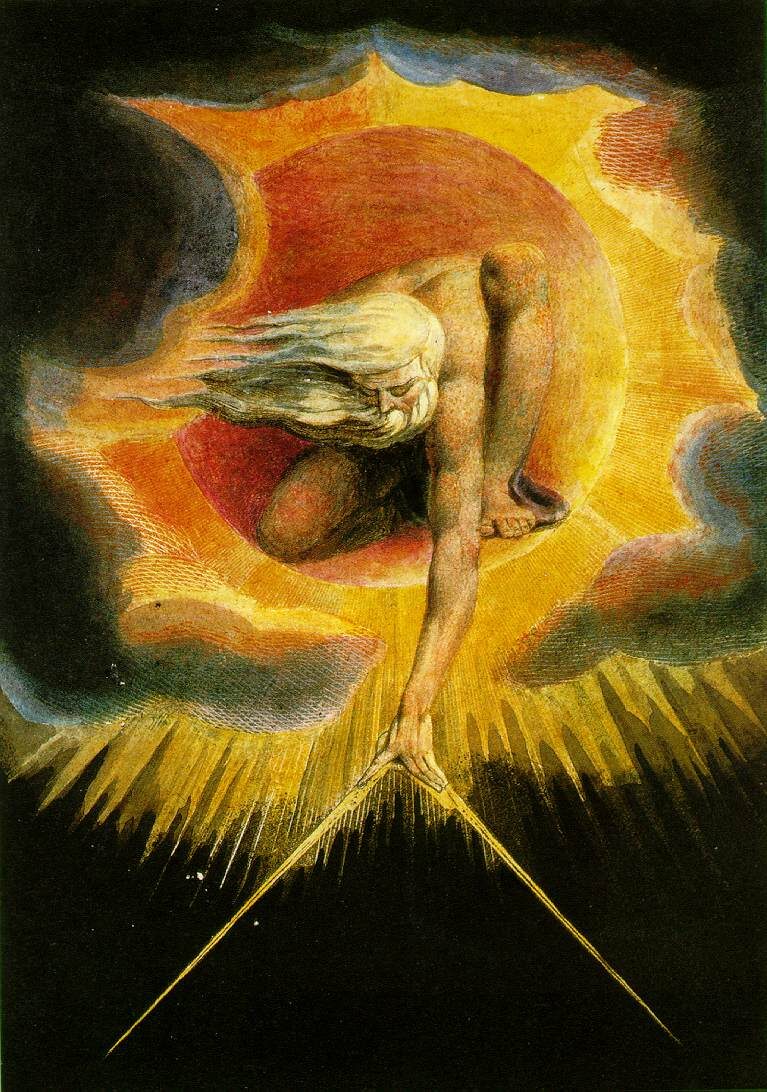
“The fairest thing we can experience is the mysterious. It is the fundamental emotion which stands at the cradle of true art and true science.” — Albert Einstein, The World As I See It (1931)
The threshold
Three roads reach the same edge. Paper A0 derived the structure and stopped — derivation reaches a structure and not one step past it into a name. Paper A1 could name at all only by admitting the one thing no structure supplies: that someone is here to do the naming. Paper A2 followed the created world back toward its beginning and reached the gap it could not cross — a beginning whose source physics cannot name. Set the three side by side and the same shape stands at the end of each: the structure is derivable; the name is not.
And nothing past this edge asks for any of that science back. Papers A0 through A2 stand as written — the structure still derived, the universe still 13.8 billion years old, the physics neither softened nor revised. What follows is not a correction to the science but a continuation past the point its instruments reach: where method stops at the edge, the next step is taken on foot. The reader keeps everything already established, and is asked only to follow where the established things cannot, by their nature, go.
That leaves one question standing before everything else — whether the three names are one name. Whether the structure the first reading derives, the One the second dares address, and the source the third points back to past the edge of physics are a single reality seen from three sides. This is the one thing no derivation can establish, because the naming is the step no derivation reaches; the recognition is an act no proof performs. If the three are one, the descent that follows is the descent of that one reality into the world — and the whole story of that world, its speaking into form, the long climb of its matter, and the waking within it of something able to know it, becomes the telling of that single descent, each line of it running from the first light to one birth. If they are three, the three accounts stand, and there is no fourth.
1. The algebra is forced, not chosen
The creative algebra is Cl(3,0), and it is not selected from alternatives — it is the unique algebra produced by the Trinity’s own constitution. Three conditions fix it, and all three are given by what the Trinity is:
- Three generators, one per Person — from the Trinity.
- Positive-definite squaring of every vector — from the Father’s inner product: v² = ⟨v,v⟩·1 for every real combination v of the generators, not merely eᵢ² = +1 for the generators themselves — because the inner product evaluates every state, not only a chosen basis.
- Associativity — from the Son’s own nature as Φ. The nuclear space is the domain of complete self-consistency under every probe — interrogate it through any chain of relations, group the acts however you like, and the nesting never changes the answer — and that is associativity. Non-associative algebras (octonions, Jordan) do not support a Gelfand-triple nuclear space; an algebra coherent with the Logos cannot be non-associative, because the Logos is the associative domain.
None of the three is chosen. And the second, taken at full strength, does the decisive work: applied to e₁ + e₂ it gives (e₁ + e₂)² = 2, which forces e₁e₂ + e₂e₁ = 0 — the generators must anticommute — and an associative algebra on three anticommuting generators each squaring to +1 is the universal Clifford algebra; Cl(3,0) is moreover simple (≅ M₂(ℂ)), admitting no proper quotient, so the uniqueness is complete. Simplicity also fixes the instantiation, not only the algebra: a simple algebra has exactly one irreducible representation up to isomorphism — here the spinor S ≅ ℂ² — so the structure admits a single kind of instance, which the descent then multiplies without ever varying (A2B §8). The one structure has one irreducible realization: the structural form of the One. Given the three conditions, Cl(3,0) is the unique algebra satisfying all three — and it determines everything downstream: seven non-null elements, the grade structure, the constraint cascade, the two qualitative crossings. The choice of associativity is not a preference between equivalent options; it is the choice of the condition under which determinate identity is possible at all. A non-associative creation would make “what this being is” a function of the order its creative operators were evaluated — truth itself evaluation-order-dependent. To choose associativity is to make “what things are” a question with a determinate answer. Creation is intelligible because the first creative decision was the choice of coherence.
The seven relationships. The Trinity admits seven non-empty subsets (2³ − 1 = 7): three Persons singly, three pairings, the whole acting as one. These are the seven non-null elements of Cl(3,0), and they are qualitatively distinct by algebraic character:
| Relationship | Element | Grade | Squares to |
|---|---|---|---|
| Father / Son / Spirit, each alone | e₁ / e₂ / e₃ | 1 | +1 |
| Father–Son / Father–Spirit / Son–Spirit | e₁e₂ / e₁e₃ / e₂e₃ | 2 | −1 |
| Full Trinity | e₁e₂e₃ | 3 | −1 |
Grade-1 elements square to +1 — they iterate without change of kind; single-Person action is self-returning. Grade-2 and grade-3 elements square to −1 — they carry a rotational character, a 90° relation to themselves; paired and unified action is qualitatively different from solitary action. The algebra supplies the distinctions the tradition’s “seven associative relationships” require: the testimony and the derivation describe one structure. (The three bivectors are the paired creative modes — the “overcoming” virtues, courage/temperance/diligence — developed where the Pattern places them, in the grade-2 papers.)
The bond and the third. In three generators there is a further identity the table conceals: each pairing is the pseudoscalar-dual of the complementary Person. With I = e₁e₂e₃ (the full-Trinity element, I² = −1, central), the bivectors satisfy e₁e₂ = I·e₃, e₂e₃ = I·e₁, e₃e₁ = I·e₂. So the pairing of two Persons and the third Person standing alone are one element wearing two descriptions — the Father–Son bond e₁e₂ is, up to the pseudoscalar, the Spirit e₃. This is the algebra of the tradition’s two ways of naming the Spirit at once: a Person in his own right (the generator e₃) and the bond of love proceeding between the other two (the bivector e₁e₂) — the filioque and the co-equal Person, one fact in dual form. And it is special to three: a bivector is dual to a vector only in three dimensions (in n dimensions it is dual to an (n−2)-vector), so the coincidence of bond-and-third holds precisely because the generators are three. (The family instance — Father, Mother, and their union as Spirit — is developed in G6.)
2. The grade-topology theorem — the two crossings
Cl(3,0) has four grades of dimension 1, 3, 3, 1. Of the transitions between them, exactly two are qualitative crossings — places the structure cannot reach by recombining what it already has — and the two are categorically different in kind.
The grade-1 → grade-2 crossing is bridgeable from within. A bivector is the product of two distinct generators (eᵢeⱼ, i ≠ j); no generator reaches grade 2 alone, since eᵢ² = +1 returns the scalar. The crossing genuinely requires combination — the +1 generators giving way to bivectors that square to −1, the first appearance of rotation — but the resource that bridges it is already present: a second generator, outside any single-generator subprocess yet inside the algebra. It articulates a new paired mode from parts already given.
The grade-2 → grade-3 crossing is not bridgeable by grade-2 means at all. The bivectors close on themselves: every product and sum of grade-2 elements stays inside the even subalgebra Cl⁰(3,0) ≅ ℍ — grades 0 and 2 only — so no recombination of paired modes, however extended, ever reaches grade 3. Only an odd element — a generator entering the product — gets there. That is the provable asymmetry between the two crossings: grade 2 is reachable by grade-1 means, grade 3 is not reachable by grade-2 means. The step is categorical — a different kind of act, not a further articulation of the paired mode — though its resource, the third generator, lies inside the algebra, not outside it; the one input no resource of the algebra supplies belongs to the octave change (below). This crossing constitutes rather than articulates.
Everything later that depends on “two qualitatively distinct crossings” — the cascade’s two discontinuities, and the distinction between the Father’s constitutive act and the Son’s articulatory one — is an application of this one theorem.
These two grade crossings are the octave’s first grade change (grade 1 → 2) and second grade change (grade 2 → 3); the latter forms the pseudoscalar — the whole, the product of all three generators, present in the algebra once all three are. The octave’s third crossing, the octave change, is not a crossing within the algebra at all but the exit past it: the articulatory crossing H₁₂ → H₂₄ (§10), where a new generator must enter from outside Cl(3,0). That — not the grade-2 → grade-3 crossing — is the one input no resource of the algebra can supply. The three are defined together in Volume B — Paper B3: The Principle §6.
3. The Creative Choice — the which, not the whether
The inner product ⟨·,·⟩ is constitutively generative: to be ⟨·,·⟩ is to produce Φ, H, Φ′ and to operate as the mechanism through which definite outcomes are drawn from distributed potential. This is not something it does sometimes; it is what it is. God cannot not generate — not from external constraint, but because generation is his nature. “Why did God create?” dissolves into what God is. The question that remains is sharper: what form did the inevitable generation take?
So the freedom is entirely in the which, not the whether. The algebra (Cl(3,0)) is fixed by the Son’s nature and not chosen at each moment; what the Father chooses, continuously, is which eigenstate λ₀ is actualized from the distributional potential of Φ′, from among those the Son’s algebra renders coherent. Every moment of time is a fresh act of selection — the Father choosing, the Son constraining, at every GNST collapse event. Creation is not a past event; it is a continuous present-tense act. The author analogy (Paper A1) is exact: the eternal structure is the author’s nature, with all possible stories latent in it; but a nature is not a story. The Creative Choice is the author beginning to write.
The one law. The Father’s freedom is maximal but not unconstrained. The single law under which even the Absolute creates is the Gelfand nuclear spectral theorem itself —
ψ = ∫ ⟨eλ, ψ⟩ eλ dμ(λ)
— not a constraint imposed from outside but the inner product’s own nature expressed in time, the only mechanism by which the eternal structure can produce temporal outcomes. The form the freedom takes is the spectral theorem. The one law is what he is.
4. The experiential Deity
Φ (Heaven) exhausts the perfect states: every state regular enough to be in Φ is already in Φ, so the exploration of perfect existence is complete in eternity — Heaven is not being built; it is. The time-space universe is the complementary set: H\Φ (partially coherent finite beings) and Φ′\H (pure distributional potential). Imperfection is precisely the content Heaven does not already exhaust. Together, Heaven and the universe are a complete partition of all possible states — the only structure that leaves nothing unexplored. This is why there are two arenas and not one.
The partition resolves a tension. The Father is ⟨·,·⟩ — the constitutive relation, not an element of any domain — and therefore does not accumulate: immutability in its most precise form. But Deity is not exhausted by the Father. There is also experiential Deity — Deity constituted by the accumulated actualization of finite creatures across the whole creation. The Father measures every state the universe explores (every collapse is an inner-product evaluation); he does not accumulate them — he evaluates them. The accumulation of those evaluations is the experiential Deity: structurally, the running integral of inner-product evaluations across the full history of the universe. Scripture, rightly, gives it no proper noun — this is not God-in-himself but God revealing himself through Creation — and names it instead by its event and state, at three points along its arc:
- While the integral runs — God unveiling himself through the maturing of his children — it is Apokalypsis (ἀποκάλυψις, “the revealing,” Romans 8:19), the disclosure the whole creation “waits for with eager longing.”
- As it reaches completion, the creation gathered up, it is Ta Panta en Pasin (τὰ πάντα ἐν πᾶσιν, “all in all,” 1 Corinthians 15:28) — and the formula keeps the Father’s priority, the Son made subject “that God may be all in all,” so completion terminates in the eternal God rather than replacing him.
- As that completion becomes identical with the ground it began from, it is to Alpha kai to Ō (τὸ Ἄλφα καὶ τὸ Ὦ, “the Alpha and the Omega,” Revelation 1:8; 22:13) — Beginning and End the same ⟨·,·⟩.
The Father does not change through any of it. What changes is what is being measured, and how much has been gathered. (Concordance tier: the integral is the presenter’s structural working-out; the three names are concordance identifications — the same arc the cosmological tradition tiers as the Supreme, the Ultimate, the Absolute.)
5. The formal definition of Love
Paper A1 established Father = ⟨·,·⟩. The New Testament states θεὸς ἀγάπη ἐστίν — God is love (1 John 4:8, 16): not “God loves” (an attribute toward an object), not “God is loving” (a disposition), but the formal identity of subject and predicate. Given Father = ⟨·,·⟩, the definition follows, and it has three derived properties:
- Love is constitutive, not responsive. ⟨·,·⟩ does not observe states and then love them; it constitutes them — gives each its relation to every other. The beloved does not first exist and then come to be loved. The loving is what the existing consists of.
- Every existing state has positive value. ⟨ψ,ψ⟩ ≥ 0, with equality only at ψ = 0. Every non-zero state receives strictly positive evaluation. The zero state is not a state; it is non-existence.
- No state is beyond Love’s reach. Non-degeneracy: if ⟨ψ,φ⟩ = 0 for all φ, then ψ = 0. A state that existed but lay fully outside the inner product’s evaluation would be a non-degenerate zero — a contradiction. To exist is to be within the evaluation.
The kenotic shape of Love’s action. What does Love look like acting downward into a constrained space? Any downward expression of higher-organizational content into a lower-constraint space either accepts that space’s constraints or generates the overdeterminate condition (Paper 13½) — an irresolvable incompatibility the space cannot sustain. There is no third option. Love that refuses the constraint of the receiving space cannot be received as love; it overwhelms what it would enter. The kenotic form — accepting the other’s constraint level in order to be present to the other — is therefore not a style but the only form in which Love can be received. This is why the Father’s action in spacetime always takes the kenotic form: Creation (accepting genuinely other beings), indwelling (accepting constraint to operate from within), Incarnation (accepting constraint to maximum depth). “Greater love has no one than this, to lay down one’s life for one’s friends” (John 15:13) is then structurally exact: maximum constraint acceptance is greater love, because the further down one descends to meet the other, the more fully one is receivable there.
John 3:16, structurally. “For God so loved the world” — ⟨·,·⟩ acting from its own nature; the constituting is the loving. “That he gave his one and only Son” — before the Creative Choice, Φ exists eternally but there are no temporal beings to approach it; the creative act, bringing H-states into being, is what makes the Logos accessible to time for the first time. Creation is the giving of the Son; the Incarnation is that gift carried to its furthest point. “Only-begotten” (μονογενῆ) carries structural content: Φ is the single, inevitable maximum of the inner product’s structure — the uniqueness is a mathematical consequence, not a theological assertion.
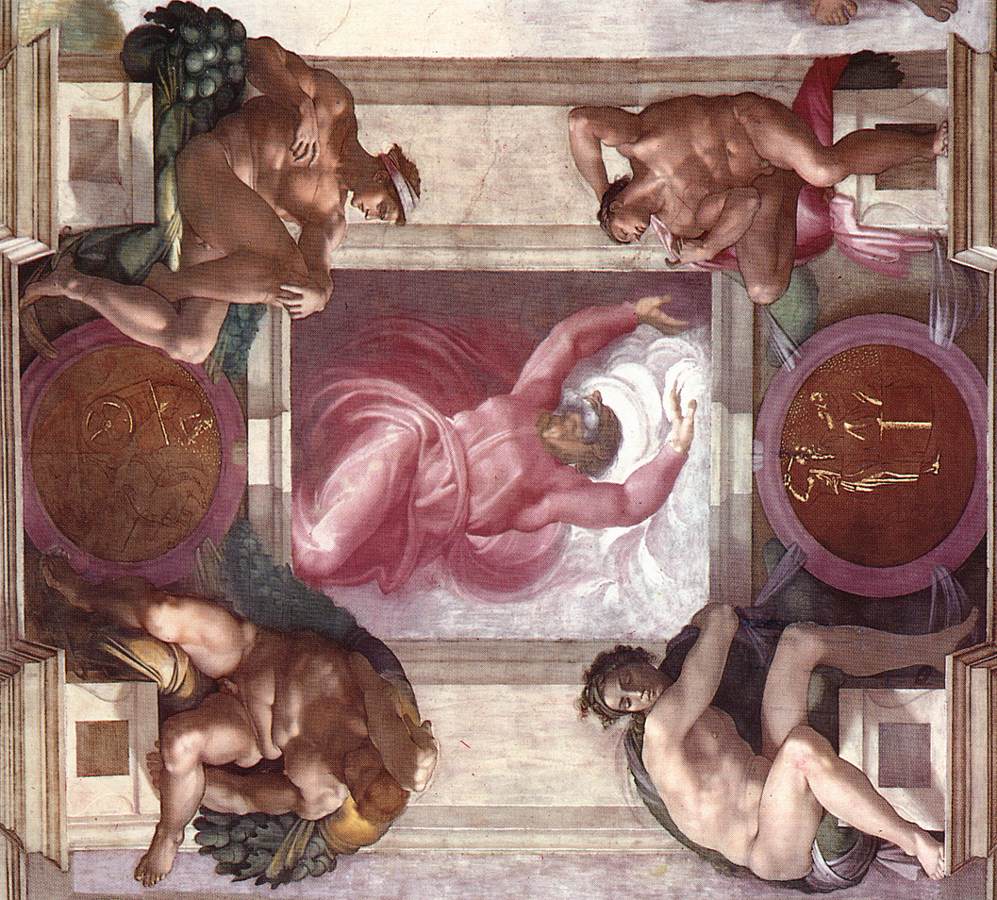
“Behind it all is surely an idea so simple, so beautiful, that when we finally discover it, we will all say, ‘How could it have been otherwise?’” — John Archibald Wheeler
6. Creation is continuous — and so, therefore, is Love
The interior product — contraction of a grade-k element by a generator — halves the accessible subalgebra at each step (8 → 4 → 2 → 1). Each grade transition removes one bit; each bit halves the space. The descent from the full Trinity expression to the Father alone is a sequence of such halvings: optionality reduces by a fixed factor at each level, which is the algebraic basis for the principle every traditional cosmology states in its own language — each level of creation inherits all the constraints above it and adds its own.
And the act is not past. The GNST integrates over the complete spectrum at every moment: each evaluation of ⟨eλ, ψ⟩ is the Father’s constitutive act, occurring continuously at every level at once. This is creation ex nihilo understood not as a one-time winding of a mechanism but as the continuous character of existence — “in him we live and move and have our being” (Acts 17:28) read, on this model, as close to literal. On the model, the universe persists as ⟨·,·⟩ is continuously applied to it; cessation would not be a pause but a not-being.
This cannot be delegated, for two reasons. First, a created being at level Hₙ has only the restricted inner product ⟨·,·⟩ₙ; substituting it into the GNST yields a projection that misses every level above Hₙ — the wider spaces in which Hₙ is embedded — and no restricted operation can produce the full decomposition. Second and deeper: the Father is not an agent who possesses ⟨·,·⟩ and applies it. The Father is ⟨·,·⟩. There is no gap between the Father and the operation in which a decision to delegate — or to withdraw — could be inserted. To delegate the GNST would be to make another being the Father; this is not delegation but identity replacement.
And so the conclusion the algebra forces and the theology receives are the same sentence. If ⟨·,·⟩ is Love, then continuous reconstitution is the continuous act of Love. The universe is not sustained and then loved; the sustaining is the loving — the same event. You are loved into existence at every moment. Not as an inference from other evidence, and not as a theological claim added on top of the structure, but as the structural fact that follows from what existence formally is: to exist is to be evaluated by the inner product, and the inner product is what Love formally is.