← Adam A2C: Down the Staircase
Paper A2C: The Constraint Cascade: Where the Two Books Speak
One fact read from both sides: aging as entropy and as the wage of the Choice; what a death sorts, and what carries a person across; the structural impossibility of an eternal organized domain of suffering — Augustine’s privation made formal; and the reciprocal circuit that turns the lossiness of actualization into fuel rather than waste.
Confidence — Math: derivation — the lossiness of spectral actualization; the structural impossibility of an eternal organized negative domain. Science: — (not engaged) beyond the entropy identification. Theology: concordance — the two-books convergences on aging, death, the sorting, and the reciprocal circuit.*
The one fact, read from both sides
Begin with the thing every life knows: it wears out. The physicist has a name for the direction of the wearing — entropy, the arrow of time, the dissipative axis that distinguishes forward from backward. The theologian has a name for it too — mortality, the sentence under which everything born comes apart. The framework says these are not two facts politely agreeing. They are one fact with one cause, seen from two sides.
That cause is the algebra’s (Paper A2⅖); named plainly, it is this. The element that confers form — the meeting of the Father’s direction and the Son’s — is, taken from its far end, the −1 at the floor of everything; and that −1 enters the created world as the temporal generator e₀, the single undifferentiated negative that the Creative Choice necessarily produces alongside everything it affirms. The scientist meets it as the Lorentzian signature, the reason time has a direction and matter ages. The theologian meets it as death — the cost that enters with the first turning-away, the dust to which dust returns. Aging is entropy, and aging is the wage of the Choice, and these are the same wearing. The Framework gives it one name: Time — Sequence with decay — as against Sequence, the bare succession that runs above the crossing, where there is change but no dissolution, which is exactly what the tradition has always meant by eternity: not the absence of life or event, but the absence of wearing.
What a death sorts
If aging is the −1 operating on what a life built, then a death is not an erasure but a sorting — and here the two books say the same thing so plainly that the only surprise is that they were ever thought to disagree.
During a life, a being can raise its content toward the coherent, the self-consistent, the durable — toward Φ, the nuclear space — or it can leave it in the merely mechanical, the automatic, the reactive. The inner-development traditions of every culture have always insisted this raising is the real work of a life, and that it is work — effortful, deliberate, against resistance. The framework supplies the structure they were pointing at. The raised content has eigenvalues in the durable range; the unraised content has eigenvalues only at the most mechanical level. At death, when the physical body that held them together dissolves, each falls to its own level. The raised content remains viable and is available for what the traditions call the continuing life; the mechanical content collapses back to the densest level and feeds the slow material circuit. This is not a moral sorting imposed from outside — it is a physical consequence of which content was actually built.
So non-survival is structural, not punitive. A being who lived entirely mechanically — nothing raised, nothing built above the physical threshold — has nothing that can persist when the threshold dissolves: not a sentence handed down, but the plain consequence of having built nothing in the one life where building was possible. And survival is graded, not binary: two who both clear the threshold can arrive with very different amounts built, one more present and formed than the other — which is why the continuing career is not uniform. It is also tiered: persistence at the next level up requires having built at that level too, so that a being who built the durable body but nothing finer faces, eventually, the same kind of threshold again. “Conditional immortality” is exactly this — survival at one level without having met the threshold for the one above.
And the friction of a physical life is not waste. Building durable content while operating inside a wearing, maximally-constrained body is harder than building it later in a gentler medium — Time bears down hardest here — and content earned against that resistance has a quality that easier development cannot replicate. The hardship is the source of the quality, not an obstacle to it. This is why the ascent credits the creature’s earthly development not despite its difficulty but because of it; “the one who sows to the Spirit will from the Spirit reap eternal life” is, read this way, structurally exact.
What carries the person across. Two things must hold for a death to issue in a continuing life, and neither can do the other’s work. The durable content built during the life — the substance of who the person became — must be preserved through the interval when the old body is gone and the new not yet given; a higher-level custodian does this (the tradition’s guardian), because it contains the durable level as a subspace the way a 3-D space contains a plane. But substance is not identity. What makes the reconstituted being the same person is the return of the constitutive center — what the tradition calls the indwelling fragment of the Father, and what the framework identifies as a fragment of ⟨·,·⟩ itself, the inner product rendered operative within the person, evaluating their inner life continuously from the inside throughout their existence. That is why this presence “knows the person better than they know themselves”: the relation that constitutes someone at every moment carries, by definition, the complete record of what they have been. Pattern without that center would be content organized around the wrong ground. Reconstitution requires both — the preserved substance, and the returning center it organizes around.
The lowest direction is a mercy
Follow the cascade all the way down and it ends not at a place but at the loss of place — Φ′, the distributional ground, the formal address of what is not. The negative side of the Creative Choice has no internal structure: no grades, nothing from which a structured dark domain could be built. It opposes and dissipates; it does not elaborate itself into a parallel order. This has a consequence the theologian has reached for centuries and could not quite secure: there can be no permanent structured domain of conscious suffering. Eternal torment would require a negative domain with enough internal structure to hold a person coherent forever, and a force to sustain it; the complement provides neither. Personal consciousness requires a maintained coherent state; dissolution into Φ′ removes the very thing that could suffer.
This is Augustine’s privation doctrine made formal rather than merely defensible: evil as the absence of a good that ought to be present, not a substance with positive content of its own. The complement has no generating capacity — nothing from which a dark order could be built — so the content that catches nothing and builds nothing simply returns to the ground from which structure came. The cascade’s terminal direction is mercy of a structural kind: suffering ends because structure ends. Φ′ is not a destination. It is the absence of one. (The structural impossibility of an eternal organized negative domain is derived; its identifications with particular traditional accounts rest on testimony.)
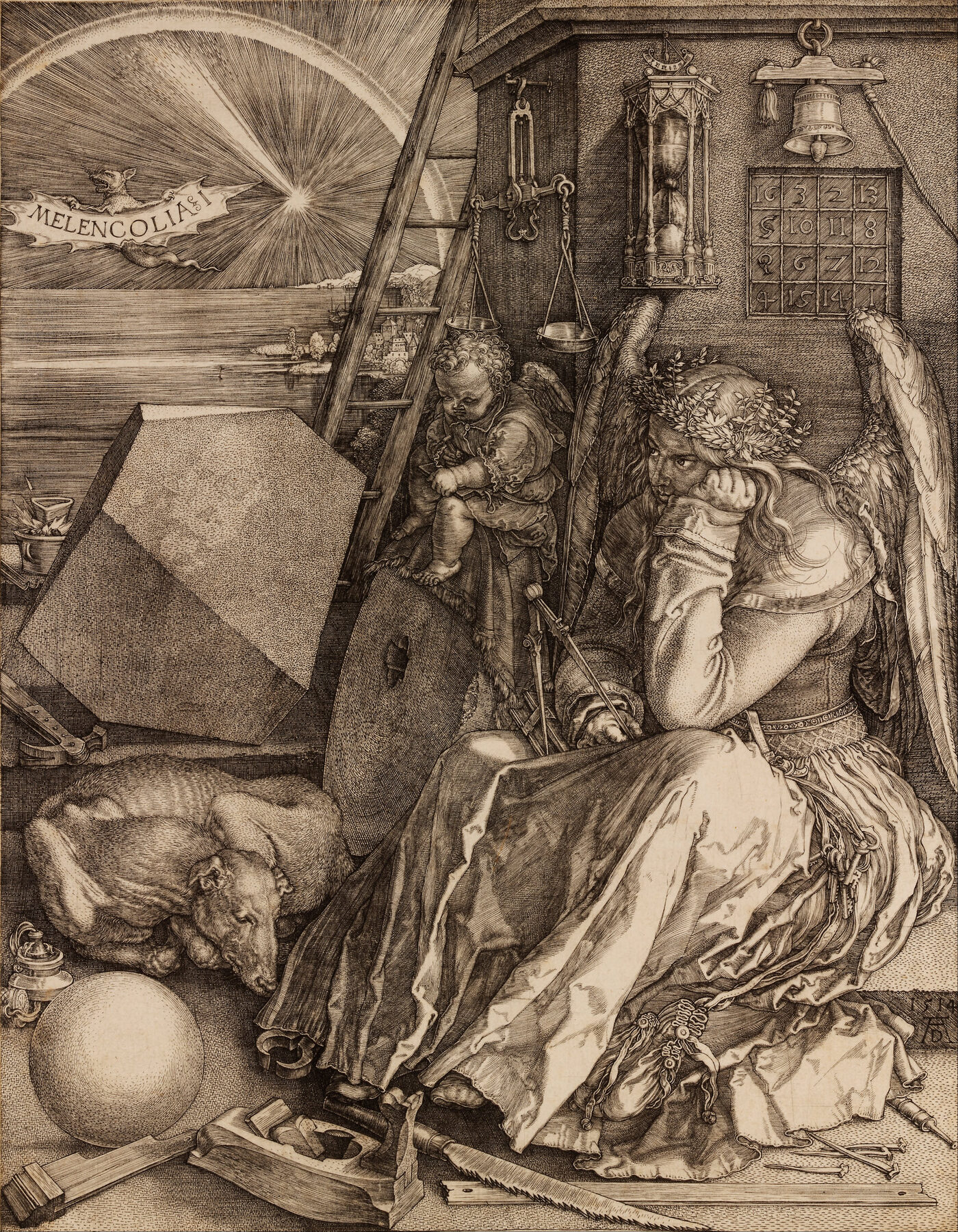
“So teach us to number our days, that we may apply our hearts unto wisdom.” — Psalm 90:12
The circuit that does not run down
One more convergence, and it is the largest. Every actualization is irreversible — the spectral mechanism is lossy: the potential not selected is not returned unchanged but transformed into the experiential record of the selection, what the traditions call the soul. That lossiness would, left alone, eventually exhaust the finite process between the two inexhaustible domains (Creation on one side, the distributional infinite on the other) — and this exhaustion is again Time, the merciless wearing that threatens even what cannot be used up: not the eternal domains, which it cannot touch, but the finite universe in its capacity as an ongoing process.
The answer is a reciprocal circuit, and it is self-sustaining precisely because the lossiness that would exhaust it is what feeds it. The raised residue of every genuine life accrues to the experiential Deity — the running integral, Apokalypsis while it gathers, the same arc the cosmological traditions tier as the Supreme, the Ultimate, the Absolute — and that accumulation generates new potential, new capacity, new ages. Two circuits run at once: a faster one, at the scale of lives and ages, that produces persons (the ascent, a being shedding constraint by constraint, recovering freedom as it climbs); and a slower one, at the scale of cosmic cycles, that produces worlds (the unraised material feeding the slow ripening of the densest level toward becoming, in time, a less constrained one). Nothing is lost. Both are the same fundamental lossiness, answered.
This is why the descent was never a fall away into a prison. The physical world is the outermost reach of a single creative motion, and the climb back is built into the motion. “In him we live and move and have our being” (Acts 17:28) is, on this reading, literal: we live within the structure ⟨·,·⟩ generates; we are maintained in being by its continuous evaluation; and the climb is not a struggle against what God is doing but the willed cooperation with it. “Be perfect, even as your Father in heaven is perfect” stops being a moral demand set at infinite distance and becomes the description of an achievable end — the creature arriving, by the long recovery of constraint, at the operating condition of the Creator, under the one law they then share.