← Paper A2C: The Constraint Cascade: Where the Two Books Speak
Adam A2D: Number Our Days
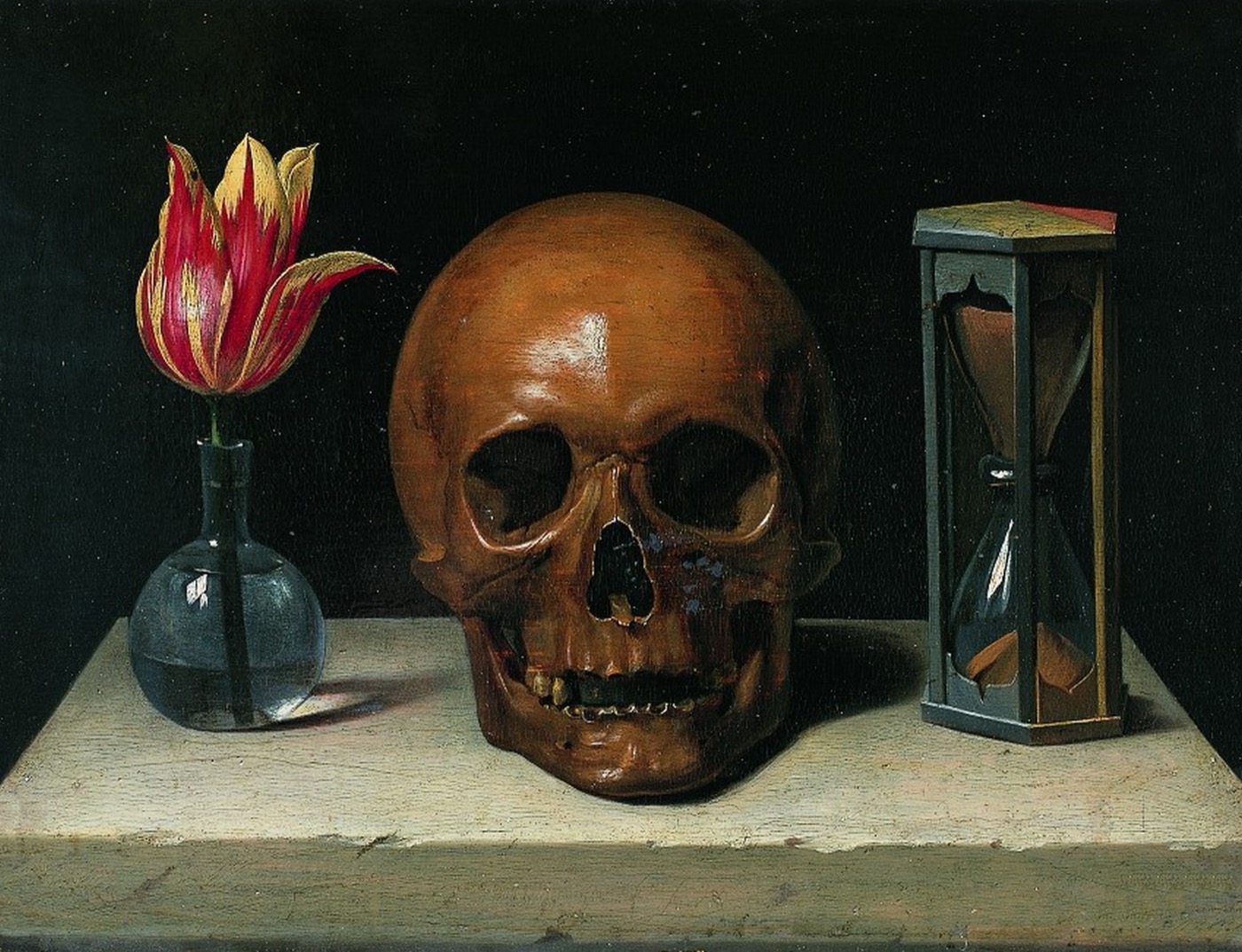
The third part was not addressed to the physicist in him. He knew it within a page, and read it anyway.
It was about wearing out. He was eighty-three; he had not needed a paper to introduce him to the subject. But he had never before seen the two names for the thing set down as one thing. Entropy — the dissipative axis, the reason the arrow of time points the one way and not the other — and mortality, the older word, the dust going back to dust: the paper said these were not two facts that happened to keep agreeing but a single fact with a single cause, the one minus sign at the floor of the algebra, met from two directions. The scientist meets it as the Lorentzian signature. The mortal meets it as death. Aging is entropy, and aging is the wage of the Choice, and these are the same wearing. He had given his life to the first half of that sentence and his evasions to the second, and here a stranger had welded them.
Then the part he had not expected to be made to sit with at his own desk on a weekday afternoon. A death, it said, is not an erasure but a sorting: what a life raised toward the durable carries across; what it left merely mechanical falls back to the floor and feeds the slow circuit; and the sorting is not a sentence pronounced from above but the plain arithmetic of what was actually built. Raise nothing above the physical threshold and there is simply nothing that can persist when the threshold dissolves. Not a punishment. The accounts, read back.
He noticed he had stopped reading and was looking at the window.
So teach us to number our days, that we may apply our hearts unto wisdom. It came up out of him unbidden, out of the part of himself he had long ago put into storage, and he was mildly irritated, both that it had come and that the paper had gone and quoted the same verse three lines further down, as though it had been listening. Sixty years he had been scrupulous about what a man is entitled to claim. He had walked out of the seminary rather than vow himself to a thing he could not establish. And the question he had refused to answer that day — what, if anything, comes through the wearing — was the question this dry little staircase of an argument had just answered, in the affirmative, structurally, without raising its voice once, and without, he was forced to grant, claiming a single inch past what its mathematics had handed it.
He did not pick the pencil back up for a while.
When he did, there was one part left in the stack. He turned to it more slowly than he had turned to anything that long afternoon — not hunting now, not exactly. He only wanted to see how they would gather it up.