← Paper A5 — The Breath of Life
Adam A6: The Unlocked Door
They had done it again, and again it did not seem quite fair.
This time it was the soul — or the mind, depending which of his two houses you asked in. The paper took the thing the neurologists cut for and the thing the catechism calls the breath of life, and it did not set the two side by side and ask the reader to admire the resemblance. It simply treated them as one object, the mathematics running underneath like a floor laid under two rooms, and carried on. The waking of an interior; the living soul; the long material labour of writing it down — one account, and no seam where the seam was meant to be.
And here was the part he had not been braced for, alone in his own chair at his own desk: it did not make him angry. It made him feel like a boy caught at something — or, more exactly, like a boy watching another boy do the very thing they had all been told could not be done, and stroll off whistling, and the roof not come down.
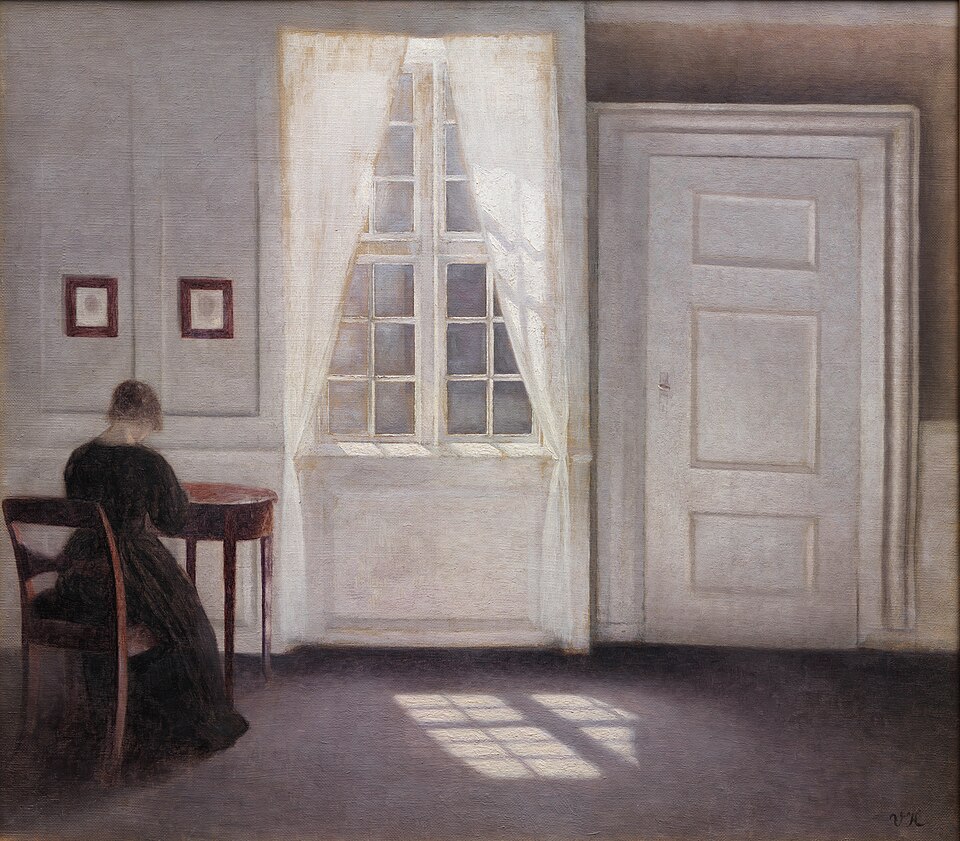
Because that was the rule, was it not. The first rule, the oldest, older than any single argument: you do not mix the two. The soul in the one room and the cortex in the other; the Logos here, the carbon there; a man of sense keeps the connecting door locked and does not stand rattling the handle in company. He had kept that door locked the whole of his life. He had taken it for a law of nature. And here was a stranger walking straight through it, both arms full, as though it had never been locked at all — as though the lock were a thing Adam himself had hung there, and the rest of creation had simply never agreed to it.
I didn’t know you could do that.
That was the whole of it, under everything, and he was old enough to say it plainly with no one in the room to hear. Not that is false — he could not make it be false, and he had given up, somewhere back in the cascade, pretending he was about to. Not even that is a trick — he had run his thumb the length of the join the way he had run it down every other, and there was nothing to catch on; the weld was clean. Only that. The plain, winded astonishment of a man of eighty-three finding out, at this hour, that a door he had kept shut on principle for sixty years had stood unlocked the whole time — and that the only thing it had ever kept out was him.
He sat with the last page turned, and did not reach for anything. The next one, he knew — he had known it for two papers now — would not be about particles, or angels, or the breath in the dust. It would be about a man. And he was no longer at all certain he wanted to come to it with the door standing open.
It landed on the mat on a Saturday, the way the important ones did. He had not been waiting for it — but he had not, if he was honest, been not waiting either. The magician had him now, both hands, and the trick was working its way through to wherever it was going; he had not caught the sleight, and somewhere back in the last paper he had understood that he was not meant to, that catching it had never been the game. And today — he noted it with the mild, far-off interest of a man taking his own pulse — today he did not especially want to. It would only spoil the trick.