Adam A0: An Unexpected Letter
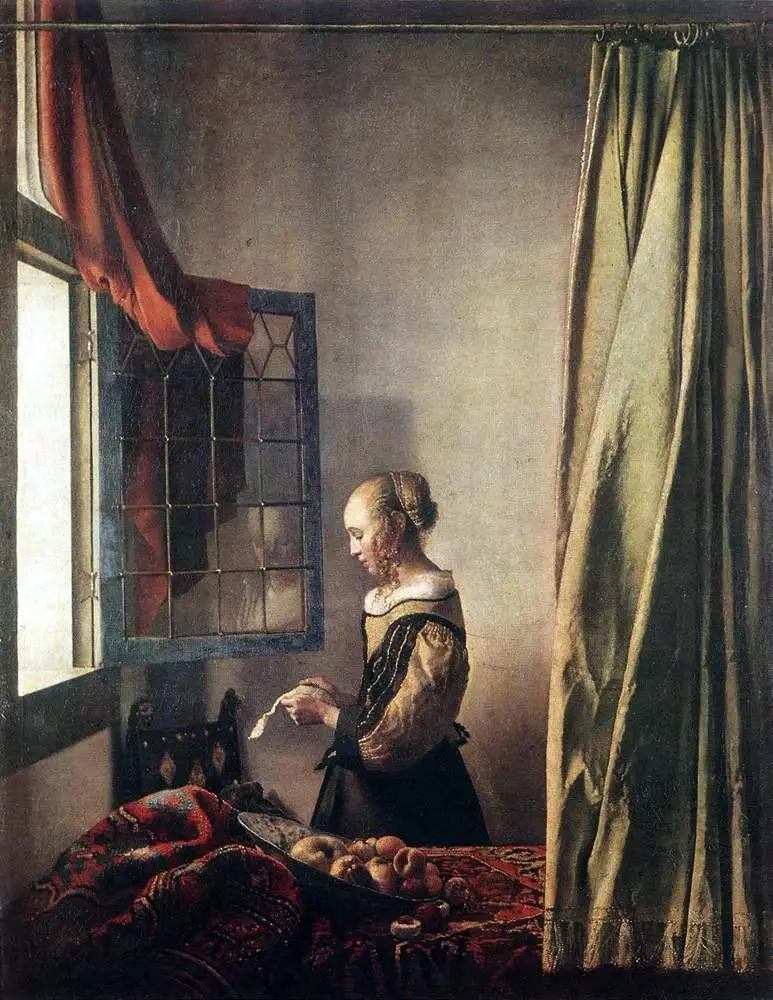
The morning post came at the usual hour, through the slot in the front door, and Adam did not get up for it. He had been at his desk since five — he kept the hours of a man who had long ago stopped negotiating with his own body — and the small avalanche on the mat could wait until he wanted coffee.
He had lived in this house seventeen years and could not have told you the name of the man who brought the mail, or the milk, or who did the laundry or removed the trash, or their faces, or even whether it was the same men week to week. People who delivered things were a category, not individuals; his attention went where he sent it, and he had never once thought to send it there. So the figure who posted the envelopes through the slot that morning came and went the way weather comes and goes, and left about as much trace. (Both women who had nearly married him had said some version of the same thing: you are entirely present in your mind, and not quite present anywhere else. He had not disputed it then. He was, he supposed, not disputing it now.)
He gathered the mail when the kettle went on. Two bills, a journal he no longer read and could not bring himself to cancel, the parish bulletin — and one envelope that did not belong. Plain. Address typed. Postage ordinary. No return. But thick — like a folded paper.
He turned it over twice, the way you check a coin you suspect. “I wasn’t expecting anything,” he said to the kitchen, which did not answer. He set it with the bills. “I don’t like receiving things I’m not expecting. Give an old man his habits.”
It sat there a week. He looked at it more often than he would have admitted — the way one watches a closed door. On the eighth morning he gave in. “Alright.” He snatched it up, half in anger, slit it with his thumb, and stood reading at the counter, his weight on one hip, fully prepared to be unimpressed and back to his coffee inside the minute.
A page in, he saw what it was trying to do, and he guffawed — a short, surprised bark in the empty kitchen. Someone had taken a rigged Hilbert space — his space, the one he had worked inside for fifty years — and was using it, with a perfectly straight face, to march toward precisely the kind of question he had spent a career refusing to let physics pretend it could touch. The cheek of it. He read on, grinning now. “Ok,” he said. “This must be a prank. One of my former students.” It had to be: too well-made for a crank, too presumptuous to be in earnest, and built by someone who knew exactly which of his buttons to lean on. Somebody had gone to real trouble to get a rise out of an old man.
It would get one — though not the kind they were after. He carried the pages down the hall to the study — the long room at the back where the serious reading was done, functional analysis shelved into Aquinas, the Gelfand–Vilenkin volumes within reach of the chair — not to find out whether it was true (it was not; he knew that the way he knew his own hand) but to find the hole. There is always a hole. A thing that reaches this far has torn somewhere, and he meant to find the tear, name it exactly, and — the part he was almost looking forward to — read the cut of the mistake backward to the student who had made it.
He sat down and took up the red pencil, the way he had sat down for his entire academic career: to grade a freshman paper written by someone who didn’t quite understand what they were reaching for.