Volume D — The Inversion
Papers D0–D7: Hitler as the complete inversion of the Good (e₁); Stalin as the inversion of the True (e₂); Mao as the inversion of the Beautiful (e₃); the crossing between the three men and the three results, the demagogue and the crowd; the Holocaust as the inversion of courage (e₁e₂); the Great Purge as the inversion of temperance (e₁e₃); the Great Leap as the inversion of diligence (e₂e₃); Lucifer, the root of evil exposed; the crossing from the archetype to evil at large, the Fall; and where the three witnesses stop together, the crossing into what follows under Gödel’s license.
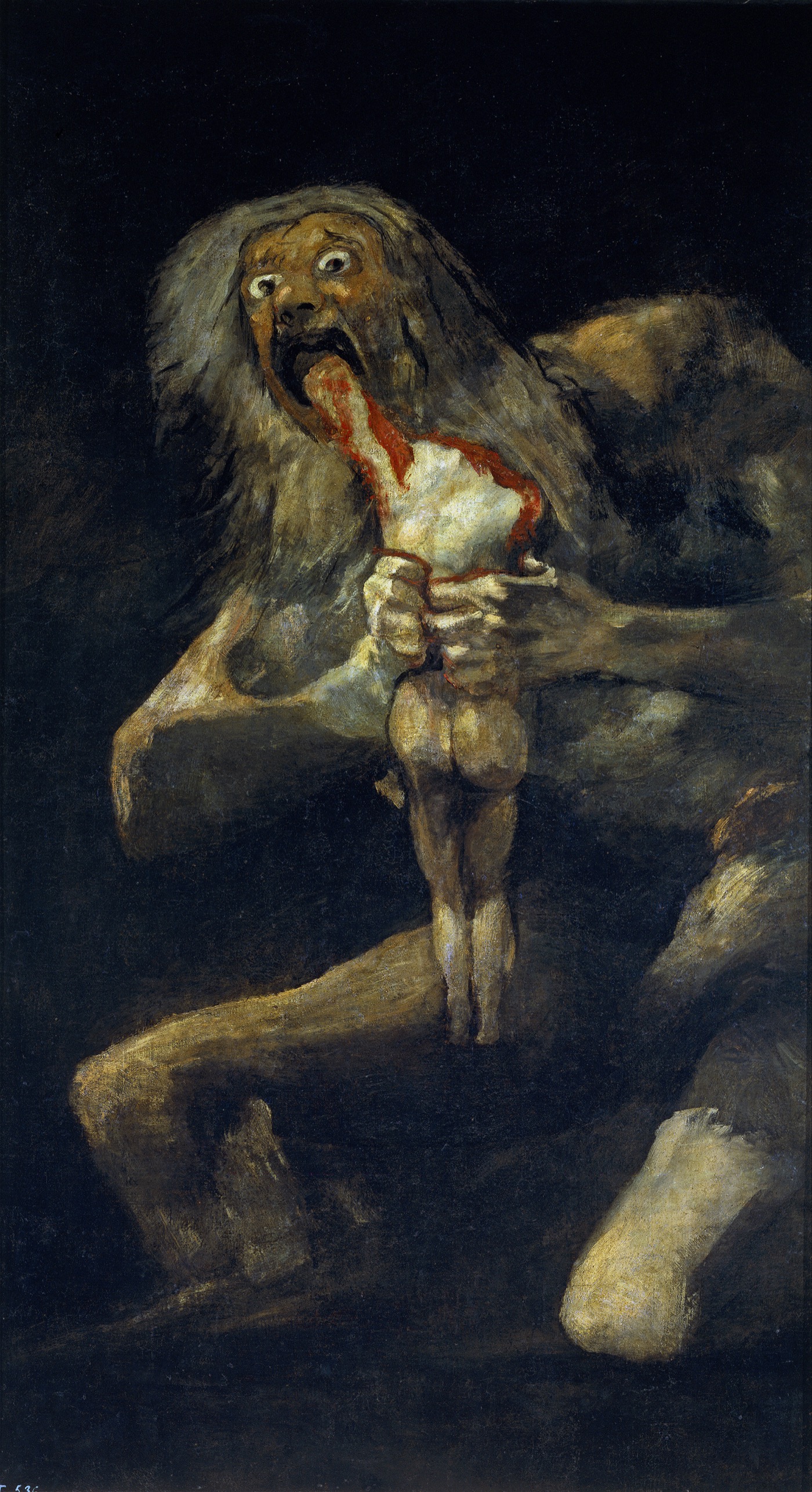
“How art thou fallen from heaven, O Lucifer, son of the morning!” — Isaiah 14:12
The first grade change — the turn from the company of witnesses to the company’s photographic negative. Evil read not as an abstraction but in the lives that carried it furthest: three men, each the complete inversion of one generator; three results, each the inversion of one bivector; the archetype beneath them; and the fall by which the inversion entered the world. Every reading is a descending octave, dated and exact, the discipline of the two shocks shown reversed — and the victims kept always at the moral center, the perpetrators the object of study, never of sympathy.
The Mi/Fa gap of the super-octave — where speculation enters
The seven volumes are themselves a super-octave: A (Do) · B (Re) · C (Mi) — D (Fa) · E (Sol) · F (La) — G (Si). Volume D opens the second half, and the C → D boundary is the super-octave’s first grade change — its Mi/Fa interval (named at the head of this volume). By the Law of Seven that interval cannot be crossed from within the ascending notes; it requires an input from outside them. That input, here, is speculation — and it is admitted deliberately, in the open, exactly at this gap.
Volumes A–C held within the norm. They drew only on what a reasonable person could grant from the conservative reading of mathematics, science, and Scripture — no testimony that varies on those accounts, no Urantia content, no astrological reading, no Gurdjieff carried as ground. That restraint is what makes A–C a foundation a skeptic can stand on.
From Volume D onward the corpus admits the wider witness set — the Urantia testimony, the astrological / natal charts, Gurdjieff, speculative mathematics and science, and non-canonical revealed texts (and, where they earn it, sources such as Private Dowding, Maria Valtorta, and Jane Roberts). This is not a loosening of the discipline but its next move: each speculative source is named as speculation and tiered as such — never worn as the chain’s own ground, never smuggled in — and the load-bearing spine of A–C is never made to depend on it. The reasonable-person foundation stands first and stands alone; the speculative reading is built on top of it and declared, at the gap where the octave itself calls for the input from beyond.
Summary of Contents
Paper D0 — Adolf Hitler Adolf Hitler read as the complete inversion of the Good — e₁, the inner product, the worth of what is — not a man who did evil among goods but a life organized, to its root, around the negation of the Good: the descending octave carried to the floor. His life set out as a seven-note octave with its two shocks, the exact photographic negative of Joan’s, every sign reversed — the negative that proves the pattern by showing its absence. The volume’s structural premise is set here too: by Gödel’s incompleteness the first turning is underivable within H₄₈, so evil is not authored at the human level but enters from a subspace it can neither reach nor seal (forward to Lucifer). A study of evil in order to refuse it, seating him nowhere among the witnesses; the silence the Host of Witnesses kept on him, examined. The victims, not the perpetrator, are the moral center of every note; nothing is softened.
Paper D1 — Joseph Stalin Joseph Stalin read as the complete inversion of the True — e₂, the Logos, the Word received — the man who set the Party in the place of the Word and made it the measure of what is true, so that truth became whatever the Party decreed and reality itself was overruled by authority: confession inverted, the search for the real abolished by decree. His life set out as a seven-note descending octave with its two shocks, the photographic negative of Augustine. A study of the lie in order to refuse it, seating him nowhere among the witnesses. The victims — the starved, the purged, the confessed-against — are the moral center of every note; the perpetrator the object of study, never of sympathy.
Paper D2 — Mao Zedong Mao Zedong read as the complete inversion of the Beautiful — e₃, the revealing Spirit — beauty enlisted to direct to a man, a Party, and a dreamworld the glory due the Creator: Bach’s Soli Deo Gloria turned into the worship of a living man, Romans 1 made a state aesthetic. His life set out as a seven-note descending octave with its two shocks, the photographic negative of Bach, the Maoist visual doctrine read as the iconography of an inverted doxology. A study of idolatry in order to refuse it, seating him nowhere among the witnesses. The starved and the persecuted are the moral center of every note; the perpetrator the object of study, never of sympathy.
Paper D2½ — The Demagogue and the Crowd (first grade change) The first grade change — the crossing between the three men (Hitler, Stalin, Mao) and the three results (the Holocaust, the Great Purge, the Great Leap). A man, however inverted, cannot become a result by himself; something must come from outside him. In the ascending octaves the input at this gap is grace — the lift a single life cannot supply itself; here it is grace inverted: not the few who raise the one but the many who carry him, not a truth received from beyond the self but a lie received in place of it, en masse. The two who make the crossing — the demagogue who leads and the crowd that follows — and the measure of guilt that belongs to each.
Paper D3 — The Holocaust The Holocaust read as the exact inversion of courage — e₁e₂, the first bivector, Joan’s principle-held-to-the-fire reversed — set out, like any subject, as a structured descending octave, note by note and dated, with its two interval-shocks at their proper places. The discipline of those shocks is the point: where the ascending octave receives at each gap an input from outside that lifts it — grace — this descent received at each gap an input from the world that deepened it instead. Those two inputs were the world’s: refuge refused, then rescue withheld — the heart of why this is the inversion of bravery. The six million, and the millions of others, are the moral center of every line.
Paper D4 — The Great Purge The Great Purge — Stalin’s signature terror — read as the exact inversion of temperance (e₁e₃, Bach’s just weight reversed), set out as a dated descending octave, note by note, with its two interval-shocks at their positions. The discipline of the shocks is the point: where the ascending octave receives grace from outside at its two gaps, this descent received at each gap an input that could have exposed or constrained it and instead lent it credit or buried it — twice the watching world was handed the chance to read the false balance truly, and twice it certified the lie. The hundreds of thousands shot and the millions broken are the moral center of every line.
Paper D5 — The Great Leap Forward The Great Leap Forward — Mao’s signature catastrophe — read as the exact inversion of diligence (e₂e₃, Franklin’s honest fruitful work reversed), set out as a dated descending octave, note by note, with its two interval-shocks at their positions. Where the ascending octave receives grace from outside at its two gaps, this descent received at each gap an input that could have grounded it in reality and instead drove it further from the real — first the competition that raised the dream past the ground, then the door the regime shut on the world’s help once the dream had become a famine, to protect its face. The tens of millions who starved are the moral center of every line.
Paper D6 — Lucifer Lucifer read as the maximum exposure of evil — its root. Where the three doors gave human portraits each inverting a single axis (Hitler the Good, Stalin the True, Mao the Beautiful), this reaches the archetype beneath them, the one in whom all three are inverted at once and from whom the human inversions are only partial, smaller echoes. Having no life-octave to walk — he is not a man but the pattern itself — he is approached through the canon, the mathematics, and the science of evil. Nothing is drawn from the Urantia material; this is the Scripture, the philosophy, and the empirical study of evil, and nothing else.
Paper D6½ — The Fall (octave change) The octave change — the crossing from Lucifer (the archetype of evil exposed) to evil at large in the world. In the ascending octaves the octave change is the crossing no one makes alone; here it is that crossing inverted — the one by which the inversion passed out of the archetype and into creation, and into us. The canon calls it the Fall and tells it twice: once of the angels, once of man — read as the canon gives it, and the second telling shown to be the first demagogue and the first crowd, the pattern of the first grade change run at the beginning of the world.
Paper D7 — Evil The end of the inversion, and the crossing into what follows. The inversion has traced evil as far as the framework’s three witnesses can carry it — through the three inverted doors and the three inverted virtues, to the archetype exposed (Lucifer), to the entry of the inversion into the world (the Fall) — and this is where the system reaches its edge and says so. On the deepest question, the origin and cosmology of the first turning, the canon is sparse and mathematics and natural science are silent; the honest thing is not to guess but to name the limit precisely and ask what it would take to go past it. The answer is Gödel — the formal reason the limit is structural, not accidental — which opens the door to the next octave, where a further testimony is admitted, fenced and clearly tiered, to speak where the system cannot.
Begin the Inversion: Paper D0 — Adolf Hitler →