Face D2: The Whole in the Part (Draft)
A sound stance shows the same shape at every scale. Where it doesn’t, look again.
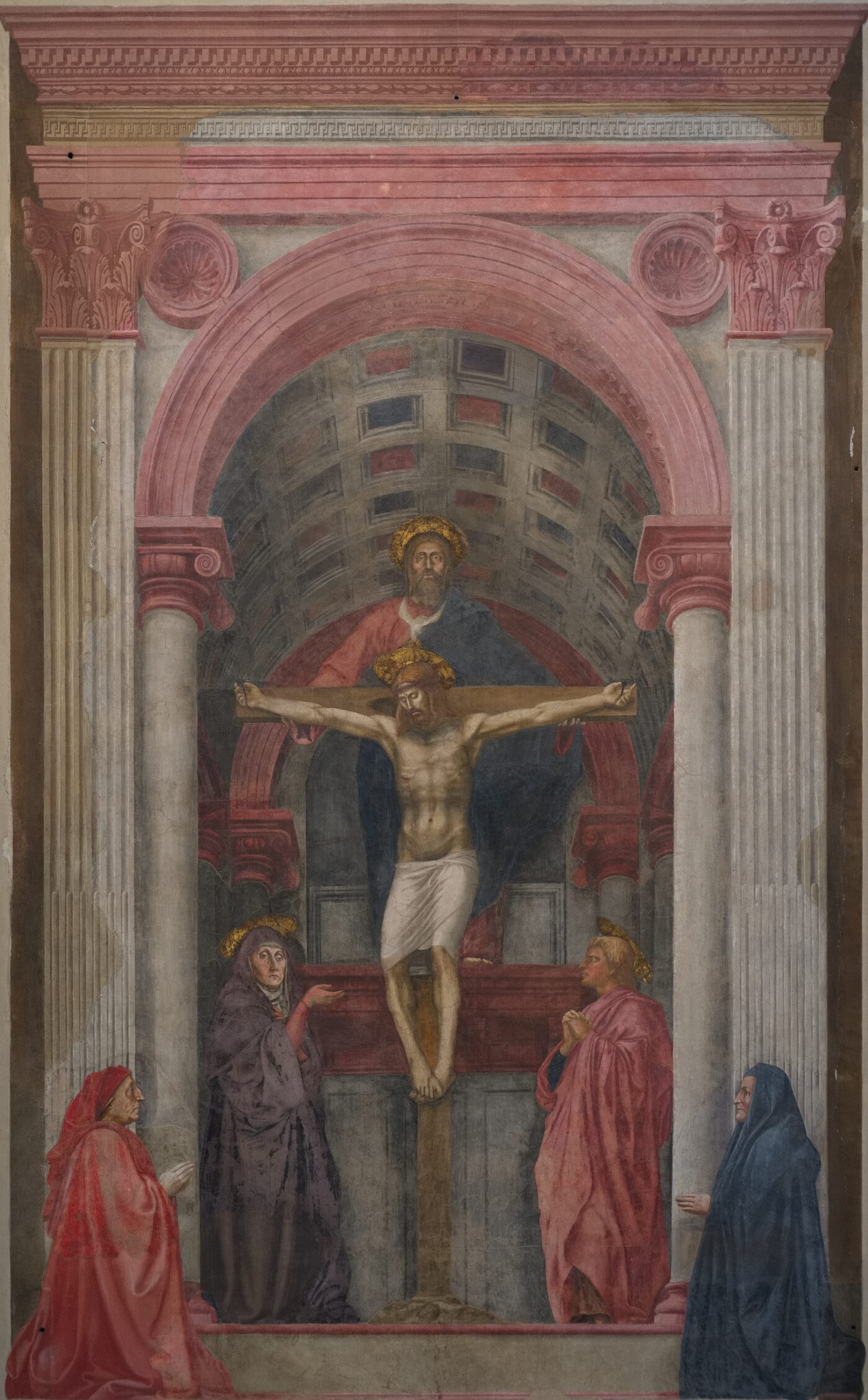
A stance true to its object repeats its own structure at every scale — the way a single feature, examined closely, turns out to contain all the others; the way the method applied to one claim is the method applied to the whole corpus. Where the part does not carry the shape of the whole, either the part is not yet understood or the whole is not yet sound. Self-similarity across scale is a test, not a decoration.
A genuine method is not a bag of separate tricks, one per situation. It recurs. Applied to a single sentence, to a chapter, to a life’s work, it is recognizably the same act. This self-similarity is itself a check: where a method gives a clean reading of one case but needs a different, ad-hoc method for the next, it is not yet the method — it is a collection of moves that happen to have worked.
The same holds inward. We found it in these very features: the twelve are faces of four, and each of the four turns out to be a constraint on one measure — examine any face closely enough and the whole stance is visible in it. That is not a coincidence of presentation; it is what it means for a stance to be true to a single underlying object. Where the part fails to carry the whole — where one feature can be cleanly denied without disturbing the others — that is a signal that the part is misunderstood, or the whole is not yet one thing.
In practice:
If your way of weighing evidence in a scientific paper is unrecognizable as the same act you use to weigh a friend’s account of their day, one of the two is not really your method — it’s a local habit. A real stance is the same shape in the large and in the small, and you can check it by looking for the seam where it stops being the same.
Formal Statement (Concordius Framework)
This is the Holographic Content Principle (the corpus’s HCP, enacted in Paper B6) read as a feature of the stance. Formally: a sound evaluation operator R is scale-invariant — its restriction to any sub-domain reproduces R’s structure, so R is a fixed point not only of self-application (D0) but of restriction. The corpus’s own measure exhibits it: τ(D) = ‖P_Φ D‖² ⁄ ‖D‖² has the identical form at the scale of a claim, a document, and the whole corpus, and the four objects (Measure, Witnesses, Boundary, Mirror) each re-present the one measure. Where self-similarity fails — where a part does not carry the whole’s structure — the HCP reads it as incompleteness in the part or unsoundness in the whole.
Tier: criterion — scale-invariance is well-posed; that a sound stance must be self-similar is the HCP, itself a near-derivation from the nuclear structure of the Gelfand triple (the whole recoverable from a dense part). The positive face of reflexivity, paired with the negative face below (D3).