Face C0: Personal Experience as Testimony (Draft)
Personal experience is evidence. It is not proof.
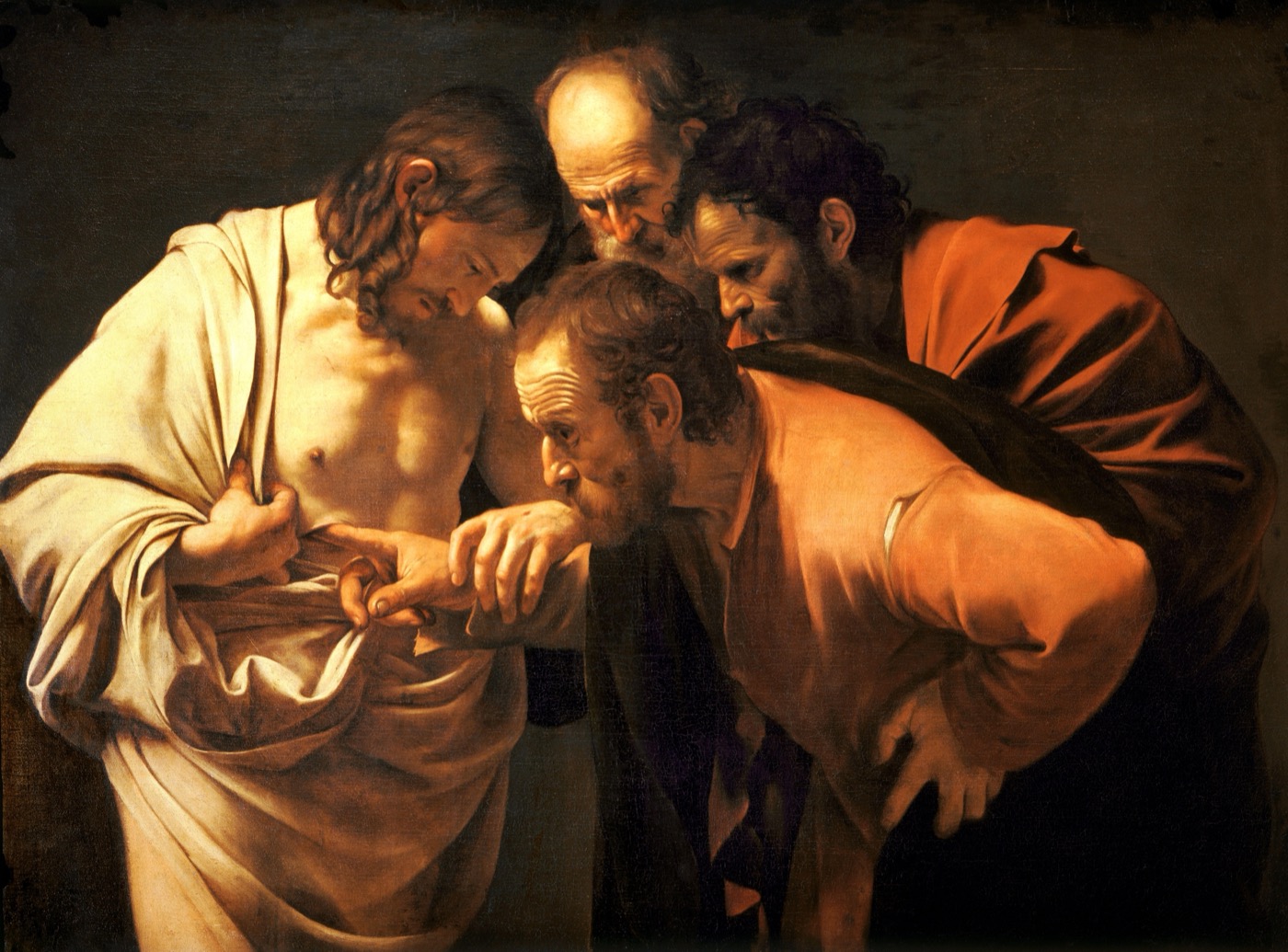
The felt sense that something is true — in meditation, in clarity, in the moment a claim lands — is genuine evidence. Dismissing it entirely is as much an error as treating it as decisive. It belongs in the weighing, labeled for what it is: one witness among many, evaluated accordingly.
Inner experience is the thing that most clearly divided the epistemological traditions. The empiricist dismisses it: inner experience is merely subjective, private, unverifiable by public method. The mystic overclaims it: inner experience is the only reliable source, prior to all external verification. Neither is right.
Personal experience is testimony. A single witness. It counts, the way all testimony counts: in proportion to its independence, its consistency, its survival of the attempt to disconfirm it. A person who has had a clear experience, examined it, tested it, sought to find where it breaks, and not found a break — has a more evidentially significant report than one who has had an experience without examination. Scrutinized personal testimony outweighs unscrutinized personal testimony, for the same reason that cross-examined testimony is stronger than unexamined testimony.
The discipline is to flag it honestly. “This is what I found; evaluate it in the light of what you find” is a legitimate epistemic contribution. “This proves it” is an error. Most thinkers who invoke personal experience either overclaim it as proof or underclaim it by dismissing it as merely psychological. Neither is right.
In practice:
You’ve been meditating for two years. Something has shifted — you’re less reactive, clearer under pressure, more able to notice your own thinking before acting on it. You’re not imagining it; people in your life have said so unprompted.
This is evidence. Not proof — the change might be due to other factors, to aging, to changed circumstances. But dismissing it entirely because it’s subjective is an error. You’re a witness to your own experience, and a reasonably attentive one.
The discipline is to hold it accurately: this is what I found; I’ve looked for other explanations; I haven’t found a better one; here is what it’s worth. Not this proves that meditation works and not this is just my subjective experience so it doesn’t count. One witness, examined, contributing its appropriate weight to the total picture.
Formal Statement (Concordius Framework)
Bounded likelihood ratio. A single experiential report e contributes to a claim C the log-likelihood increment Δℓ = log[ P(e | C) ⁄ P(e | ¬C) ], with 0 < |Δℓ| < ∞: nonzero, so it is genuine evidence and may not be discarded; finite, so no single report can drive the posterior to 0 or 1 — it is not proof. In framework terms e is the phenomenological signature of a catching event, τ_r(D,R) > 0 — lower-constraint content recovered into the H₂₄ domain — and its weight grows as the receiver’s noise floor falls and as disconfirmation has been sought and not found (each failed refutation adds an independent Δℓ, Face C1). That its own τ(e) < 1 (Face A0) is the same statement from the source side: an H₄₈ encoding cannot certify.
Tier: derivation — the bounded-likelihood bound, plus Face A0. Face C2 is its n → ∞, zero-exception limit.